
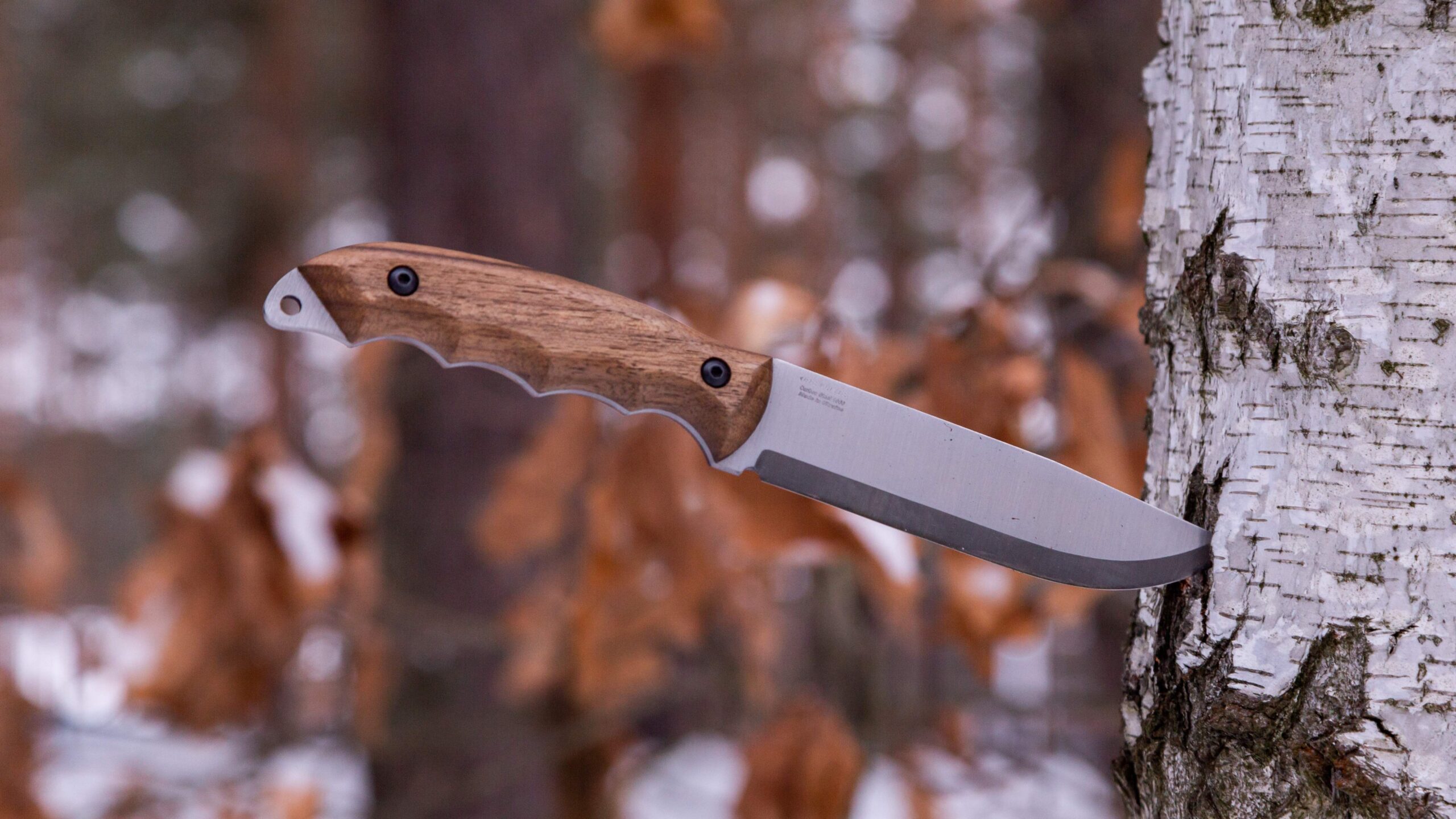
What’s the difference between bushcraft and survival knives? Is it just a marketing term made to fool people into buying the wrong thing or there’s actually a degree of credibility behind both? Let’s find out.
Bushcraft vs Survival Knives — on the surface level
At a basic level, let’s take a look from the “purpose-based” standpoint to the differentiation between these two types of knives.
Survival is about getting out of a hostile environment as fast as possible, like a forest, without being fully prepared for the task. Your goal in this scenario is to survive despite hostile conditions. Survival knife should be a versatile blade, able to do everything to a meaningful degree. For example, chopping wood, carving meat, hunting, digging or processing wood. It won’t be as good as a specialized tool, but it would do the job and save your life.
Survival knife is about getting out of the wilderness ASAP. They are good for >7 day scenarios, where you need to get out of the forest, taiga or tundra as fast as possible. For example, a heavy blade of the survival knife makes it easier to hack trees and bushes, so you can build a temporary shelter to ward off the elements. Serrated parts of the edge can help you cut ropes, parachute risers or links, emergency safety belts and so on.
Blade of the survival knife packs some weight, while the edge itself is suited towards toughness and designed to withstand chopping. Usually, the total weight of the survival knife is between 150g to 500g to provide additional momentum. This helps to use it as a temporal replacement for an ax, allowing you to take on such tasks as building simple shelter or hacking through bushes. However, this comes with a drawback of this knife performing less efficiently at specific everyday wilderness living tasks.
What scenarios does the survival knife help you to account for?
- Batoning; Heavy blade of the survival knife makes it easier to chop things down or in half, however, in most cases this activity is damaging to the edge; Since battoning is essentially replacement for an ax, this is also a time consuming task which is against the principle of energy economy during long-term bushcraft scenarios.
- Self-protection is one of the key goals behind the design of survival knives;
- Being used as a shovel replacement; You might need to do it to survive, but while actually living in the wilderness you have time to craft a shovel.
- General wood processing; While added weight allows you to do it, it won’t be as calorie efficient as using the ax. Keep in mind — you can always accompany your knife with a hatchet to account for woodworking activities in the wilderness. Great option – Bush Axe CSH by BPS Knives.
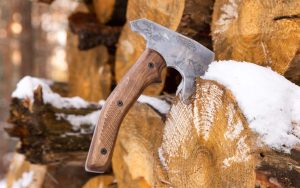
Keep in mind — batoning requires a survival knife to have a full-tang design, otherwise doing so will leave you without a knife. The goal behind survival knives is to improve your chances against wilderness, not your comfort.
The summary of a Survival Knife benefits and drawbacks:
- With survival knife you are going to benefit heavily in short-term survival scenario;
- Survival blades are suited to be efficient at wide variety of tasks at once;
- From the daily use standpoint, survival knives is about emergency and efficiency.
Bushcraft knife is about living in the wilderness for more than a month. During bushcraft scenarios you have time to prepare for wilderness. While survival is mostly about getting out, bushcraft is all about getting in and making the most out of it.
During bushcraft your main priority is ease of use. Therefore, a good bushcraft knife is all about utility and convenience of use while doing basic wilderness living tasks day to day, for a long time. This is a tool, specialized for fine cutting tasks, fish fileting, edibles foraging, walnut foraging, wood carving, skinning and capping. Goal of the bushcraft knife is to provide you with a reliable tool to sustain yourself in the wilderness for longer than 1 month. From the utility standpoint, assuming you can bring a hatchet, your best choice for bushcraft is a small, versatile blade with sheath. Like Adventurer CSHF by BPS Knives.
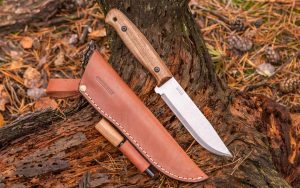
Bushcraft knives must be durable. Imagine 6 weeks of moderate knife abuse, then multiply it by two and add up occasional batoning. While survival is a sprint, bushcraft is a marathon. For example, bushcraft knives should be easy to maintain in the wilderness, have good resistance to rust, chipping and moisture. Handle of the said knife should account for prolonged exposure to the weather conditions. Plastic handles are bad for cold weather, and won’t be as convenient as handles made from natural materials such as wood or Micarta.
During bushcraft you have more than enough time to do things. Should a good bushcraft knife be a good shovel replacement? No, you can make one with such a knife. What about batoning? You had time to prepare for this beforehand.
Bushcraft knives are best used with a saw and hatchet combo. During survival your goal is to get out ASAP, during bushcraft — to settle a camp and live through seasons. Tools such as hatchets help to take some of the workload off the main knife, while saw accounts for safe wood cutting.
Stay Sharp.