
Selecting the right knife becomes effortless for individuals with a good understanding of these tools, yet it can pose a bit of a tough job for those new to this domain, especially when it comes to choosing a knife for hiking. Numerous details and specific features need careful consideration, and grasping these nuances requires a certain level of technical knowledge.
In this article, we will discuss the peculiarities of choosing a knife for your best hiking experience.
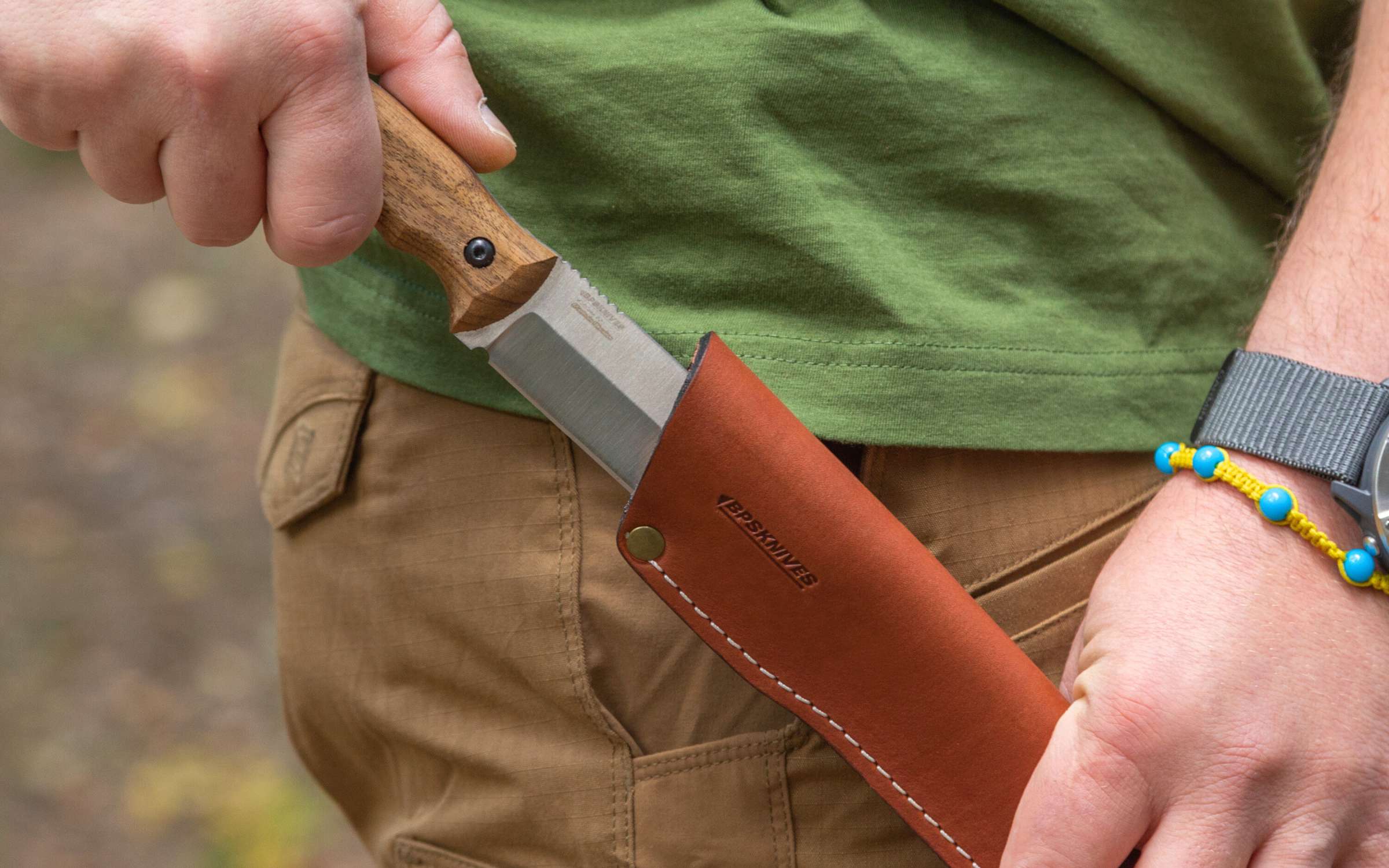
Why Is the Process of Choice Important?
Choosing a knife means looking for a tool you can definitely trust. Choosing the wrong option has a number of disadvantages, including:
- The wrong choice makes the knife unreliable.
- The ineffectiveness makes this option useless.
- It may even be dangerous for you as your safety may depend on the effectiveness of the knife.
- You may spend a substantial amount of money on a useless tool.
Knives are a complex area, but it is worth studying as it is much less risky when you know much about them. In addition to that, choosing a knife carefully means that you will have a multi-purpose tool that will cover different needs and will always be handy.
And, since your choice of hiking gear determines your whole experience and may significantly transform the level of comfort of your trip, you can get into trouble if you embark on your journey unprepared. The same applies for the choice of the knife. If you plan on cutting tree branches or unpack food boxes, you need a knife that would be versatile and durable enough. This is also true for choosing a survival knife.
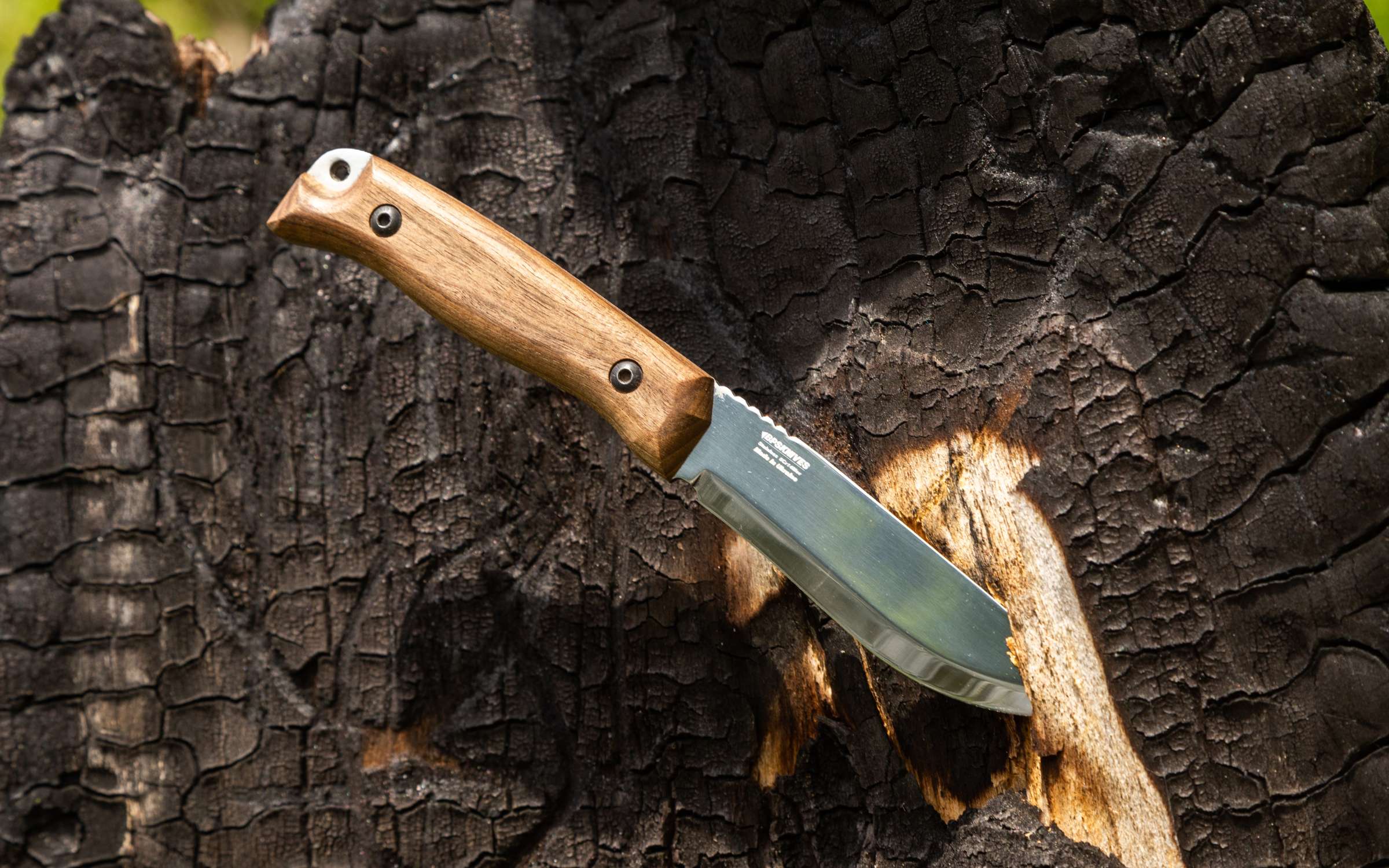
What Are the Peculiarities of Choosing a Knife for Hiking?
Hiking tools are essential outdoor tools. Their main qualities are versatility and durability, so they are always at hand when you are surrounded by a natural environment. Usually, hiking knives feature stainless or high carbon steel blades, with designs such as drop points or clip points for various tasks. You can base your choice of fixed or folding blades on your own preference and purpose, as your individual case matters.
Generally speaking, a hiking knife should be comfy, but this isn’t the only standard you should be basing your choice on. There are certain parameters that are an absolute must for choosing a knife for hiking:
Blade Size
Opt for a blade size that balances your specific needs. A blade between 3 and 5 inches is usually suitable for various tasks encountered during hiking.
Blade Material
While stainless steel is corrosion-resistant but may be harder to sharpen, high-carbon steel is easier to sharpen and holds an edge well but is more prone to corrosion.
Blade Shape
You can choose between:
- Drop Point: Versatile and suitable for general-purpose tasks.
- Clip Point: Good for detailed cutting tasks and precision work.
- Spear Point: Well-balanced and effective for piercing.
Multi-Functionality
Some hiking knives come with additional features such as built-in fire starters, whistles, or integrated tools for added utility.
Sheath
- Many hiking knives come with a sheath for safe storage and convenient carrying.
- Materials can include leather, nylon, or Kydex.

Do’s and Don’ts
Let’s break down the main do’s and don’ts of knife selection so that this task will be easier for you:
Do’s
- Identify your purpose — with a concrete goal, choosing the right knife will be easier.
- Consider blade material — it will make your choice more focused.
- Set a budget — this will help you find your perfect match and avoid unnecessary expenses.
Don’ts
- Ignoring reviews — you never know what people’s practical experience will show. This is especially true when choosing a survival knife.
- Neglecting the weight and balance — the weight and balance of a knife significantly impact its usability.
- Assuming one size fits all — you will need to focus on your specific needs.
Conclusion
The choice of a knife is a responsible process, especially when you are choosing a knife set, but with science and our points, you will have more confidence when choosing a knife for your needs. Just make sure that you are choosing according to general recommendations and approach the task with responsibility, it will only make you more acknowledged of what knives are and what their specifics are.
When choosing a knife for hiking or other activities, remember that knowledge is power, and the more time you spend on preparation, the better your time, spent in the natural environment will be. So being educated on the specifics of different knives may save you a lot of resources, as well as help you avoid risks.