
Testing the sharpness of your knife is essential for monitoring its performance and effectiveness. By testing the sharpness, you can easily detect signs of potential issues and undertake the necessary steps.
But to test the sharpness of a knife properly, you need to understand the specifics and technical characteristics of different knives. This involves some theoretical knowledge, but don’t worry, knowing how to test knives for sharpness is no rocket science! Let’s have a look at how to perform sharpness tests.
What Is Edge Testing?
Knife sharpness tests are an important step in providing proper care to your knives and ensuring they are stored in suitable conditions and get enough attention. By performing regular testing, you can detect and fix problems quickly. You can also use knife sharpness test charts for more convenience.
How to Perform Edge Testing?
Proper testing is important for assessing the performance of the knife and its potential. Here are some of the best knife sharpness tests, they include:
Paper test
You can perform a knife sharpness test with paper as paper is one of the most common mediums for testing a knife. Hold a piece of paper in one hand and the knife in the other. Place the edge of the knife against the top edge of the paper and slice downward with a slight angle. A sharp knife should cut through the paper cleanly and easily.
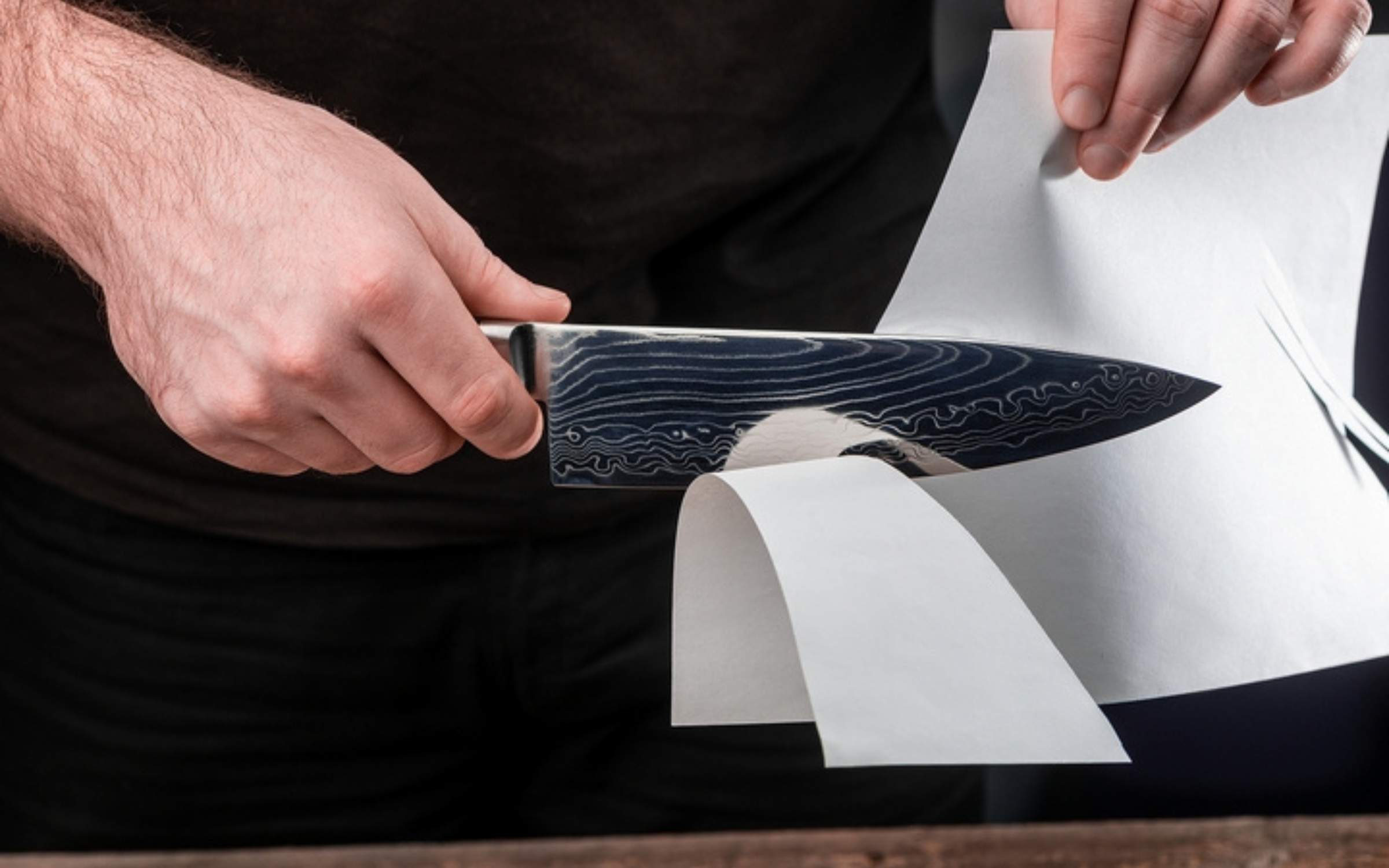 Photo from psymbolic.com
Tomato test
Attempt to slice a ripe tomato by placing the knife on its surface and gently applying downward pressure without sawing. A sharp knife should easily penetrate and slice through the tomato skin and flesh.
 Photo from togknives.com
Hair whittling
This is a more advanced test, often used by knife enthusiasts to test for extreme sharpness. Hold a piece of hair in one hand and try to cut it by gently pulling it across the knife’s edge.
Fingernail test
Gently place the edge of your knife against your fingernail at a slight angle, without applying any pressure or sliding motion. If the knife catches or sticks to your nail slightly, it’s considered sharp. But pay careful attention as you might accidentally put your hands at risk.
Thumb test
Carefully place your thumb (usually using the pad opposite your thumbnail) perpendicular to the blade and gently slide it across the edge, not along the length. You’re not trying to cut yourself but to feel for burrs, nicks, or a smooth edge. You need to pay careful attention while doing this one as even with a little carelessness you can seriously injure your fingers and hands in general.
Quality of the Initial Edge
Your knives should be high-quality and this is exactly why investing in a helpful tool is worth it. The quality of the initial edge of a knife plays a crucial role in determining its sharpness and overall cutting performance. Several factors contribute to this correlation: contact surface, fewer irregularities, like burrs, on a microscopic level, and material integrity.
Knife Sharpness Tester Scale
There is a special device that can accurately define the level of sharpness of your knife and it does it pretty quickly. It uses Brubacher Edge Sharpness Scale (BESS), the scale, developed by Dave Brubacher, and you will only need to use a simple tester for effective measuring. The results will help you to perform better maintenance and prevent potential damages.
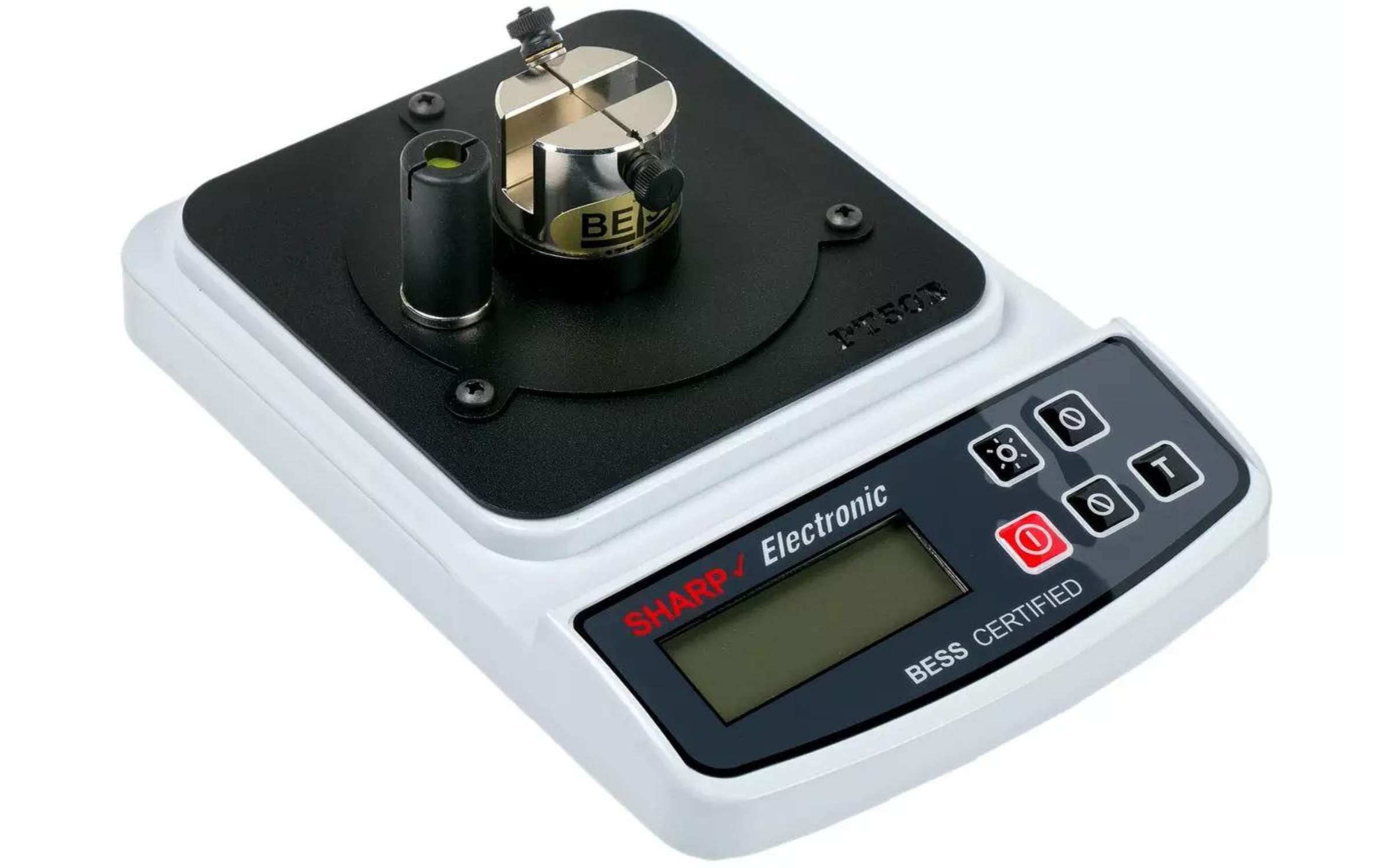 Photo from knivesandtools.co.uk
Additional Points
Sometimes, proper care is not about concrete measures, it’s about details. Careful attention will help you ensure the quality performance of your knives. This is why some additional points include:
Photo from pexels.com
Frequency of Use
Frequency of use also affects the sharpness, especially if you store the knives well and show them proper care.
Storage Conditions
Storing knives properly will help you keep them sharp and maintain cleanliness in the kitchen. It will also help you avoid rust.
Among some of the reasons knives lose their sharpness, are:
- The usage of an improper cutting surface.
- Lack of honing.
- Infrequent sharpening.
- Storing a knife without a sheath.
- Improper cleaning and using abrasives that may damage the blade.
These factors are among the various reasons why knives lose sharpness, so it is worth learning everything about them. When testing the knife’s sharpness, it is recommended that you also check other signs of possible damage like rust, stains, or dirt.
To Conclude
Even if you are not an ardent knife lover, proper care is key. By performing the above-mentioned steps, you will be able to improve the way your knives are stored, as well as to keep them sharp. Follow the simple rules and your knives will always be sharp and nifty. It is not difficult to provide them with proper care, regular maintenance, simple care and attention to detail will be enough.
You can also use a knife sharpness tester scale in order to determine how effective your knife care is. Regular efforts and testing are enough for your knife maintenance to be efficient. Educating yourself on how different materials should be stored and how proper storage affects knives will also be helpful.