
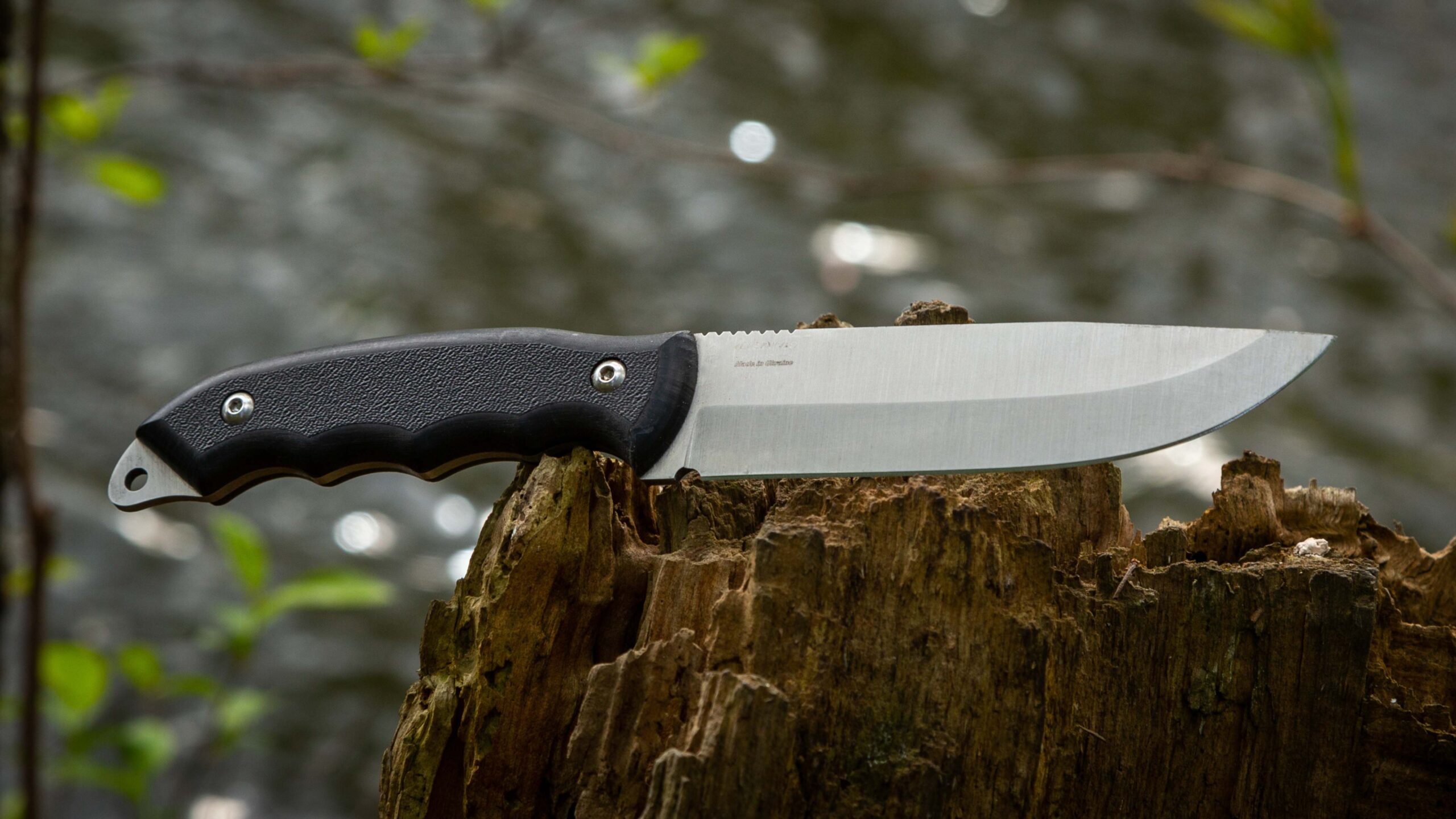
Looking for a reliable partner during a fishing trip? Let’s take a look at how to pick a fishing knife that’s going to last, excel and help you in every task during the trip.
Fishing knife A to Z — what’s to consider and how to best prepare for the trip
Does Fishing Trip Duration Matters when picking a Knife? Depending on the situation, you might need a different blade for each scenario. For example, a simple trip over the road to the nearest fishing pond might not require much equipment.
- A simple 1 night stand fishing trip. There are no added requirements, aside from the blade not being grotesquely big.
- 7+ days of fishing alone. Be sure your knife is good for cooking and fileting the fish.
What tasks should the knife excel at to be good for fishing? Here’s a non-exhaustive list of tasks you are going to use your knife for during a fishing trip:
- Line Cutting. Fishing Lines are hard to tear apart, since it’s something they were designed against. You are going to cut them from time to time to avoid fish taking up most of the lining during escape, and you need to do it fast. Otherwise, you can risk damaging your fishing pole. In certain scenarios, you also might want fish to remain unharmed by the line. A good fishing knife should be able to cut a heavy-duty line in one slice, not more, not less.
- Bait Prepping. Pre-made bait is good, but you also should be able to make one in the fields. Fish also prefers small pieces over the large chunks of bait, so a decently sharp fishing knife should make a difference in making your bait appear much more uniform.
- Slaughtering Fish. You have to end this fish’s life for good and it’s best done in one go. You don’t want a fish to believe it has the second chance to escape. Robust handle that can provide additional grip and a sharp, sturdy blade which can go through the neck, head, belly or gills with ease is your best option.
- Cleaning and Filleting. Some go for a two-knives option for this, while others prefer to do it all with one knife. Whatever the weather, a sharp blade is essential for this.
- Camping, Cooking, Building Fires. These are secondary objectives for a fishing knife, but nevertheless as important as the rest of the tasks. You need to be sure that your blade is good for cooking a fish, carving kindling out of the log.
What types of decay a fishing knife should be good against?
- Moisture. Not so obvious implications of having too much water around it decrease in grip qualities. You need a knife with a handle that won’t slip as easily, therefore try looking for fine wooden or Micarta handles, as they generally have decent water-resistance qualities. G-10 could be a solution, but some users report it being too slippery while wet.
- Corrosion. Water, water is everywhere during fishing, and the blade of a good fishing knife should account for that. Rust can easily kill any decent knife, therefore looking for rust-resistant steels are essential in this task.
- Plastic Deformations. Worst you can go with is blades too rigid for the task. Fish come in different sizes and with a strong desire to live. Might not be a biggie, but a tough blade is a good choice too, especially with good chipping resistance. Your edge is going to cut through bones and it’s best to have one that won’t break while slightly bending during the cuts.
- Thermal Shock. During winter fishing trips you should also account for the edge being resistant to repetitive «heating-cooling» loops. Most powdered and carbon steels are good at resisting thermal shock, yet a cheap knife might easily become too brittle from this.
Technical requirements for the good fishing knife
Overall, here’s a general overview of the good fishing knife qualities:
- Сomfortable handle. When it «kicks» in your hand — this is a no-go scenario. You must be able to hold the knife firmly, whether it is wet.
- Good edge retention. Yeah, fish is all soft and soggy, but there is a real risk of damaging a brittle edge of the knife. Avoid weak bevel types for this, such as overly hollow or thin.
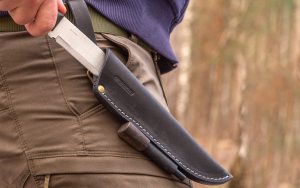
- Sheath. A good knife is the one that delivers cuts precisely when they are needed. Sheath will improve speed at which you can execute the fish or cut lining right away. For this particular task having a knife strapped to your belt can make a lot of things easier.
- If the handle is plastic — be sure it has specialized texture to improve the grip.
- Means to unhook the fish. This is crucial, you need some sort of hook remover at hand while fishing.
- Pair your blade size to the fish you are catching. Small game fish — 5 inches, medium game fish — 6 to 7 inches.
Is there any specific size-dimensions-grind advice for a good fishing knife?
- Blade: should be easy to re-sharpen in the fields, durable, resistant to rust and salt-water;
- Material: you’re good with powdered steels, and most of the high-carbon ones. Steel with additives that improve corrosion resistance are a good choice.
What grind type to consider for a fishing knife?
- Convex Grind. Usually, resharpening of such knives requires professional help, therefore Convex grind on the knife is good for >7 days fishing trips.
- Flat Grind. This is your typical fishing knife, as its grind starts at the top and tapers gradually to the point. Flat Grind offers versatility for the anglers and provides an extremely sharp edge without need to be resharpened every so often. It would be difficult to sharpen on your own, and the blade can get fragile with extended use.
- Hollow Grind. This is blade type with inward curves at each side, which create a thin edge with razor-sharp point. Depends on your taste, but overall Hollow Grind edges are known to dull faster during extended outdoor use.
What point types to consider for a good fishing knife? Different point types can be beneficial for certain tasks, and while there are many out there, anglers have certain preferences:
- Clip Point, with slope closer to the top of the blade;
- Drop Point, which begin to slope right from the handle itself;
What blade length is optimal for a fishing knife? Something between 5 and 6 inches for an all-purpose fishing knife is a decent choice. Most fileting knives start at 7 inches, but at the expense of versatility. In case you want to hack large bait, thick lines and big fish — you should consider something from 7 to 9 inches.
Should you consider a serrated blade for the fishing task? Actually, this might help you to filet the fish, but might make cutting lines slightly harder. Serrated or partially-serrated edges can add up to the benefit of longevity of your fishing knife.