
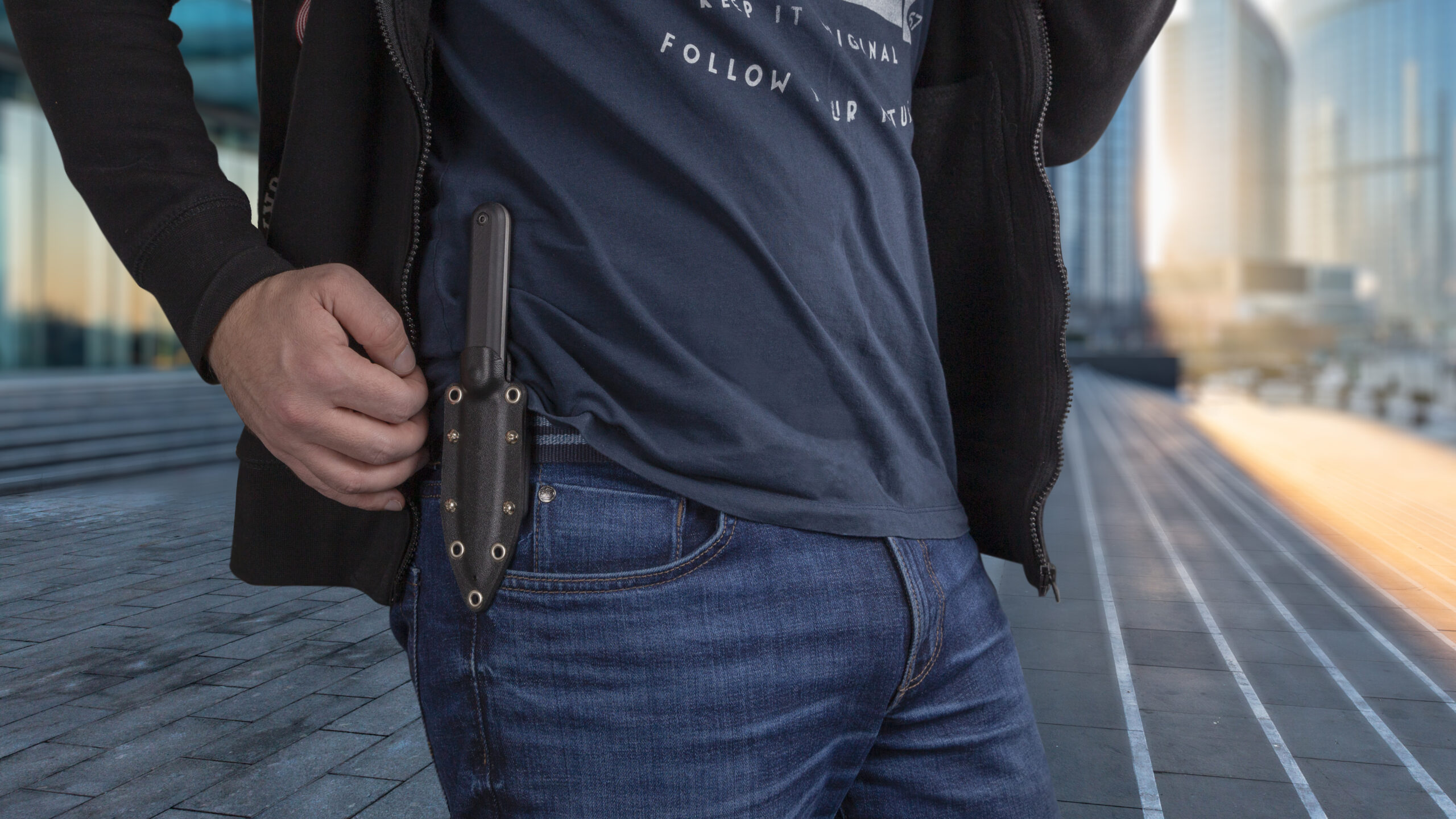
How to avoid a $2000 fine while traveling with a knife? Going abroad or just visiting “city next door” on your own? Should you bring a knife? And how would you bring a knife safely? What are the requirements to transport a long or short knife? This article has interesting facts of traveling with a knife covered.
How to avoid knife confiscation and $2000 dollar fines in airports and abroad in the plane?
This part is about plane safety of different airline providers. Rules may differ from country to country, but there are some general instructions to follow. We’re going to cover TSA rules for carry-on, general rules on airplane security with a knife and guidelines to help you take a BPS Knives almost anywhere. Keep in mind that you can always order a BPS Knives production with a worldwide delivery.

What is carry-on baggage and why can’t it hold any knives? The carry-on is what you take aboard the plane immediately. Any sharp objects in the carry-on have been banned since 9/11 as part of the «War on Terrorism» policy. According to the TSA rules, only “plastic or round-bladed butter knives” are allowed on the plane. You can’t take any sharp objects aside from those — including the most confiscated Pocket Knives — in your carry-on baggage.
You are always expected to leave any sharp objects when going through the airport. This is general consensus and rule of decency — you don’t take a knife with you, unless there’s a reason. For example, you could be a hiker, tourist or wildlife enthusiast, then having a knife with you aligns with such a backstory. If a knife in your baggage looks like something unexpected — don’t take it with you, as you might lose it forever.
Ceramic Knives are never a good option in carry-on baggage. While ceramic knives can skip past the metal-detector in the airport, once found by an officer or x-ray scan you’re going to get a fine ranging from $2000 to being shunned off the board for the safety of others. Best advice is «don’t», unless they are packed in your checked luggage.
Depending on how illegal your knife is, there are different outcomes after inspection:
- Airport security may allow you to leave the security line and figure out a solution by yourself, but only if the knife you carry does not present an immediate threat.
- When you carry a combat or tactical knife, chances are higher that airport officers can refer you and your baggage to law-enforcement, unless there’s a good reason behind your taking them aboard the plane.
How to get a $2000 fine at the airport for bringing a knife with you? You need to bring anything from the list below:
- Axes and hatchets;
- Bows and/or arrows;
- Ice axes and ice picks;
- Knives with blades that open automatically (such as switchblades);
- Knives with blades that open via gravity (such as butterfly knives);
- Any double-edge knives or daggers; meat cleavers; sabers; swords; machetes; throwing stars — or shurikens.
What to do if airport security wants to confiscate your Pocket, EDC or any other knife from the carry on? Straighten your back, stand up and calmly ask the officer if they can:
- Put the knife from carry-on to checked luggage;
- Ask for the knife to be delivered separately, to a hotel via taxi or rideshare;
- Put the knife back into your car or give it to a friend, who’s not going with you;
- Mail it back to your house or remain in the airport locker for the duration of your trip.
Remember — there are still options to “save” your knife from the airport security, but after an officer has told you “no” the knife can only be confiscated or sent away.
What knives are legally allowed to carry on a plane?
- Everything sharp and over 6 cm is prohibited in most cases; British Airlines, TSA, Canadian Airlines and most European airports have a strict rule on this one — no sharp things in your carry-on baggage. Be it scissors, box openers or any other sharp object — it’s better to pack them into the checked luggage to avoid trouble and $2000 fines.
- Sharp items over 6 cm should be covered; Swords, knives and blades are allowed under a condition that they come packed, covered and sheathed in your checked baggage. In certain cases, you might want to have documents on antiquities which are over 50 years old.
Is there a TSA approved «something» sharp knife or something alike? No, there are no such things as TSA Approved items. If you see this as a marketing point in the knife card at any shop — consider a wiser option, such as BS2FT CSH, which is not a TSA Approved blade, but nevertheless compact, comes with sheath to cover it while transporting and safe to carry in the checked luggage.
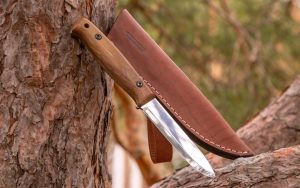
What type of knives can you bring in checked luggage? The checked luggage can contain a wide variety of items that are forbidden to take into the carry-on baggage. Common wisdom here is that if it’s forbidden by the law to take a knife with you aboard the plane — you can put it covered in paper into the checked luggage.
Here’s a type of knives you can bring aboard the plane in checked luggage:
- Fixed Blade Knives: non-foldables with either type of tang design for as long as they are within the 7 inch — or 17.7 cm — range.
- Folding Knives: but as long as their blade is shorter than 4 inches — or 10 cm.
- Pocket Knives are not perceived as an immediate danger at the Airport, however, gravity-assisted knives are generally prohibited, even in Canada.
- Kitchen Knives: while used for cooking, airport security rules require you to handle them with covering, sheats or inside a closed casing.
- Multi-tools are allowed, unless their blade is not longer than 2.36 inches, or roughly 6 cm.
Explicitly, TSA states that you can bring certain knives in your checked luggage, once they are properly covered. The exact statement goes like this: “any sharp objects in checked bags should be sheathed or securely wrapped to prevent injury to baggage handlers and inspectors.” Here’s a list of knives allowed in your baggage:
- Bread knife;
- Butcher knife;
- Carving knife;
- Pocket knives;
- Hunter’s knives;
- Kitchen (or chef) knives;
- Paring knife;
- Santoku knives;
- Swiss Army Knife;
- Swords and sabers;
- Utility knife.
Having a knife loose in your baggage is a way to be left without a knife. In fact, airport security officers have every right to take away such a blade. Concealed knives are an instant way to meet the scrutinous security checks with added fines, the same is true for disguised knives.
Traveling with a knife by a train — rules to follow
Train is generally considered a chill way to travel, therefore you aren’t expected to bring in a Bowie knife with you. You can, however, take a small pocket knife with you to cut food during the trip if you take any, but only if the blade is under 3 inches — or 7.6 cm — and doesn’t have any combat-oriented features, such as Spear point type, Serrations or gravity-assisted unfolding.

Spring knives are banned everywhere at once. This is a type of knife which launches the blade into the target after pressing the lever. Since this makes such blades a legal weapon you are prohibited from taking them anywhere, be it train, plane or ship.
Knife allowance varies from railway to railway. Some train lines allow you to carry a knife in your baggage, while others explicitly forbid any sharp objects aboard the train. Before traveling, be sure to check in with the local rules on knife carry in a train. For example, Amtrak bans knives from being carried on the train, while Greyhound can let you take a blade in checked luggage, but not in the carry-on.
Traveling with a knife by ship — what are the requirements? Norwegian Cruise Lines lets you carry knives shorter than 4 inches — or 10 cm — aboard the ship, while scissors are just allowed. Carnival prohibits both, while Royal Caribbean bans knives, but allows the carrying of scissors with blades shorter than 10 cm or 4 inches. Always check in with local marine and cruise rules beforehand.
Stay Sharp.