
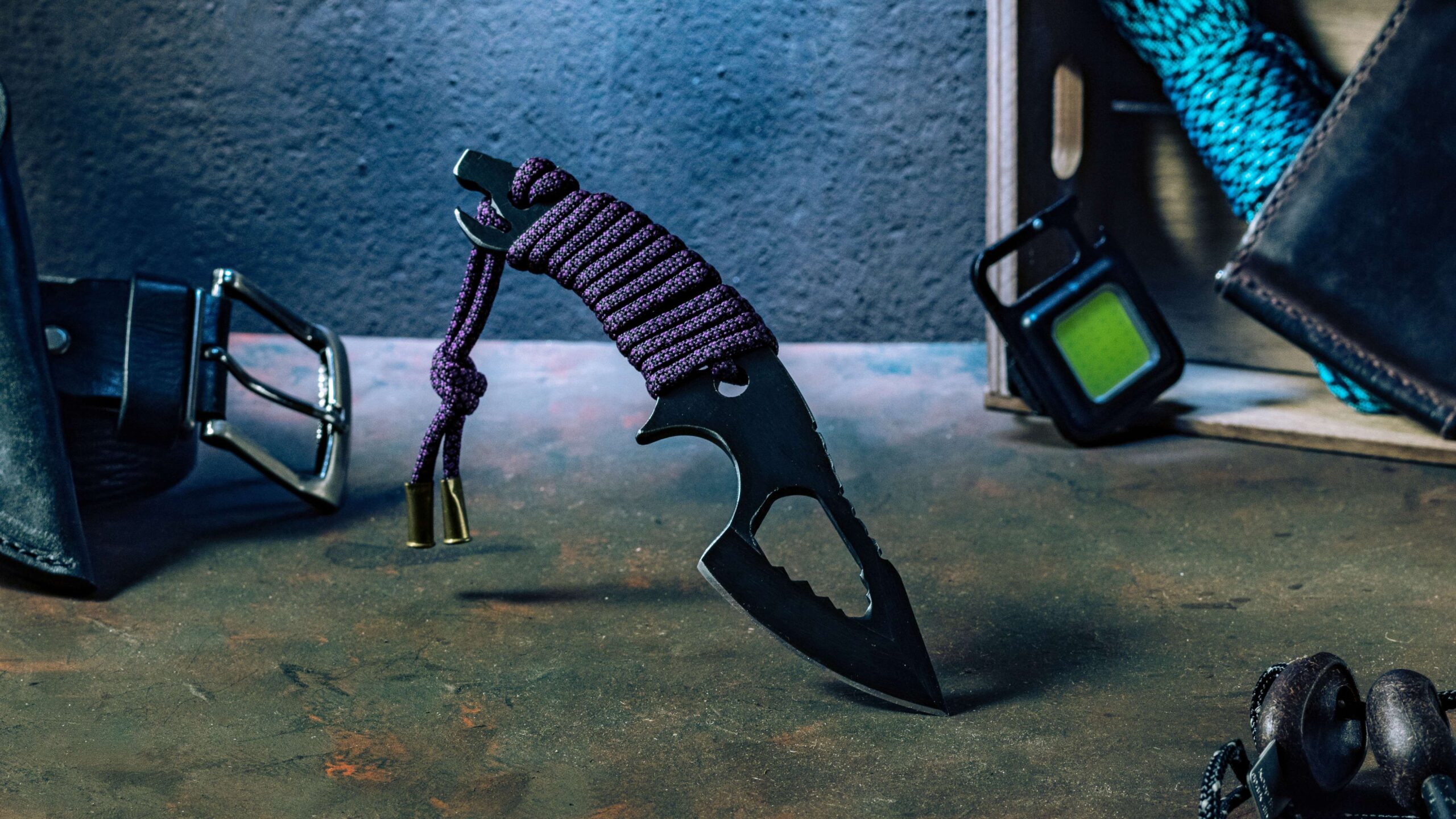
This article delves into the art of using paracord on knife handle. We’ll explore what paracord is, why it’s used paracord for knife handle wraps, the benefits it offers, and different wrapping techniques you can utilize.
Adding a paracord wrap to your knife handle is a practical and practical way to:
- Enhance grip and control: The added texture of paracord improves your grip, especially in wet or slippery conditions.
- Increase handle comfort: A paracord wrapping knife handle, making it more comfortable to hold for extended periods.
- Add emergency cordage: The paracord itself serves as a readily available source of cordage in case of emergencies.
- Personalize your knife: Paracord comes in various colors and patterns, allowing you to personalize your knife’s appearance.
What is Paracord?
Paracord, an abbreviation for parachute cord, has a fascinating journey. Originally designed for the critical task of suspending paratroopers safely from the sky, this lightweight yet incredibly strong nylon cord has transcended its military origins. Today, paracord finds itself in a surprising range of applications, with one popular use being the wrapping of knife handles.
Here’s a deeper look at paracord’s unique qualities:
- Strength Beyond Its Weight: Don’t be fooled by its thin profile. Paracord boasts impressive tensile strength, meaning it can withstand a significant amount of pulling force. This makes it perfect for tasks requiring reliable support, like suspending weight or creating secure lines.
- Durability Built to Last: Paracord isn’t just strong; it’s also built to endure harsh conditions. The nylon material is resistant to abrasion, moisture, and mildew. Whether facing the elements or demanding use, paracord maintains its integrity.
- Versatility Unbound: The true brilliance of paracord lies in its adaptability. It can be easily cut, tied, braided, and woven into countless configurations. This versatility allows for a wide range of applications, limited only by your imagination.
- Paracord’s journey from the skies to a ubiquitous tool is a testament to its practical and versatile nature. So next time you see paracord, remember its impressive history and the endless possibilities it offers, including transforming a simple knife into a more comfortable, secure, and personalized tool.
Why Wrap Knives with Paracord?
There are several reasons why people choose to wrap their knives with paracord.
Things You Should Know before start
- Knife type: Not all knives are suitable for paracord wraps. It’s best to use knives with full tangs and lanyards holes for secure anchoring.
- Paracord length: The length of paracord you’ll need depends on the size of your knife handle and the chosen wrapping technique. A good starting point is 6-7 inches.
- Safety: Be mindful of local laws and regulations regarding knife carrying and modifications.
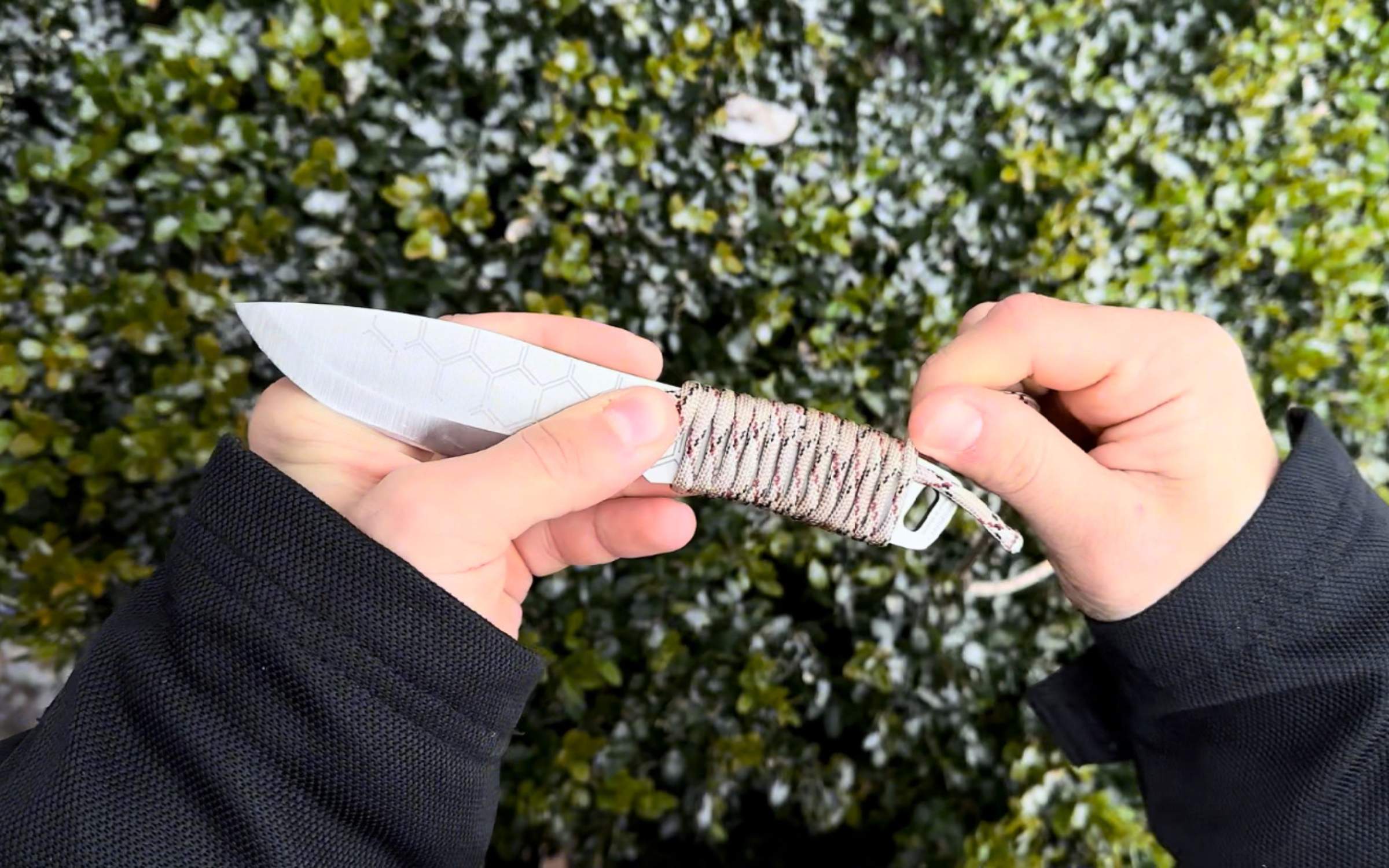
Making an Easy Wrap
Here’s a simple cobra knot wrap to get you started:
- Secure one end of the paracord through the lanyard hole at the bottom of the handle.
- Wrap the cord around the handle in a diagonal fashion, going over the top and under the bottom.
- Repeat step 2, keeping the cord tight and maintaining a consistent pattern.
- Once you reach the desired length, thread the end of the paracord through one of the loops and then back through the previous loop, creating a lock.
- Secure the remaining cord by tucking it under the wrap and trimming any excess.
 Photo from bladehq.com
What are the Other Wrapping Techniques?
While the cobra knot is a great starting point, several other paracord techniques offer varying levels of complexity and aesthetics, making them ideal for customizing your skeleton knife or skeleton handle knife with a skeleton knife paracord wrap. Here are some popular options:
- Snake knot: A simple and secure wrap with a braided appearance. This technique is perfect for beginners due to its straightforward nature and provides a comfortable and secure grip.
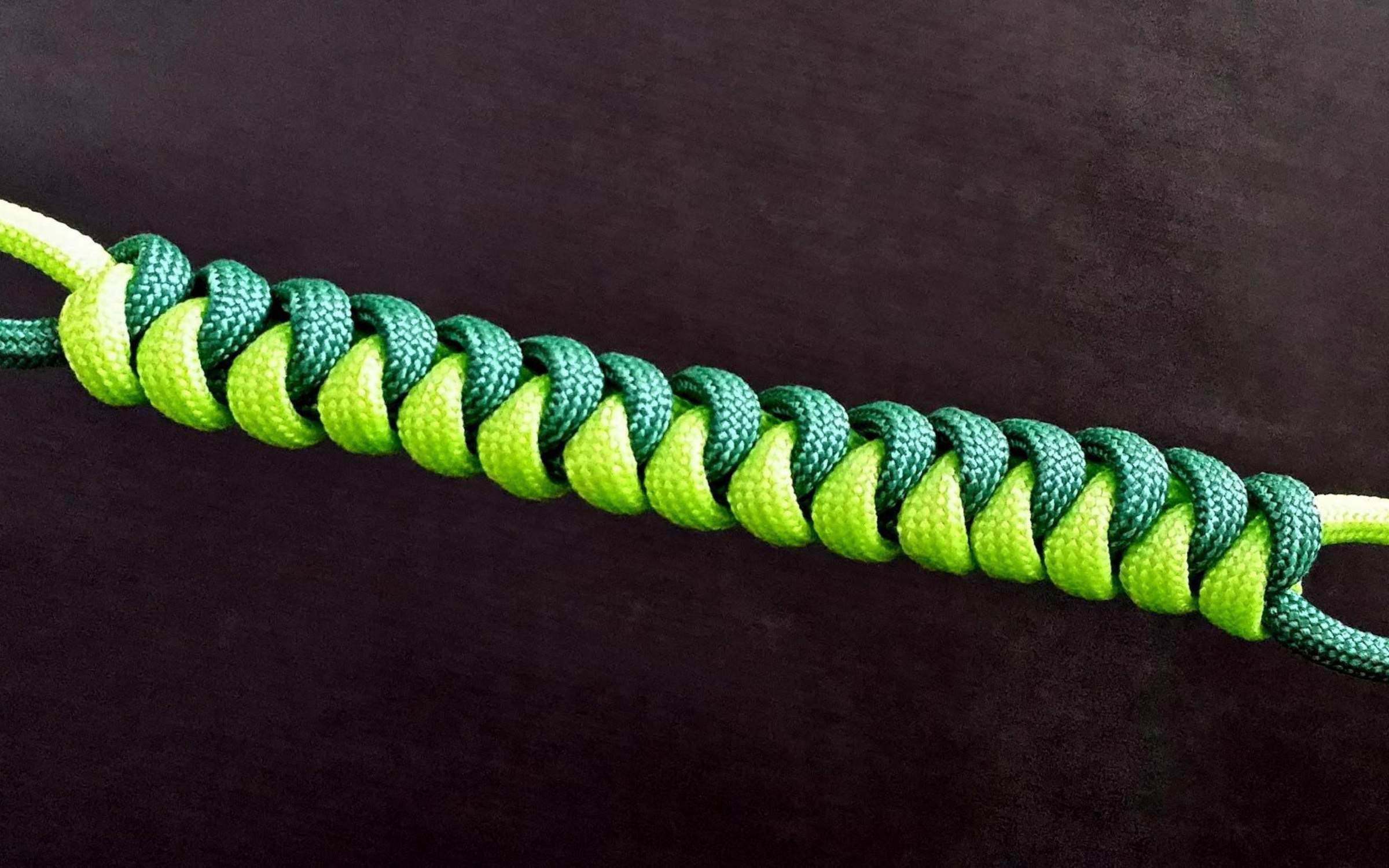 Photo from pinterest.com
- Turk’s head knot: This technique creates a decorative knot pattern around the handle, adding a unique visual element to your skeleton knife. While slightly more complex than the snake knot, it remains achievable for most users with a little practice.
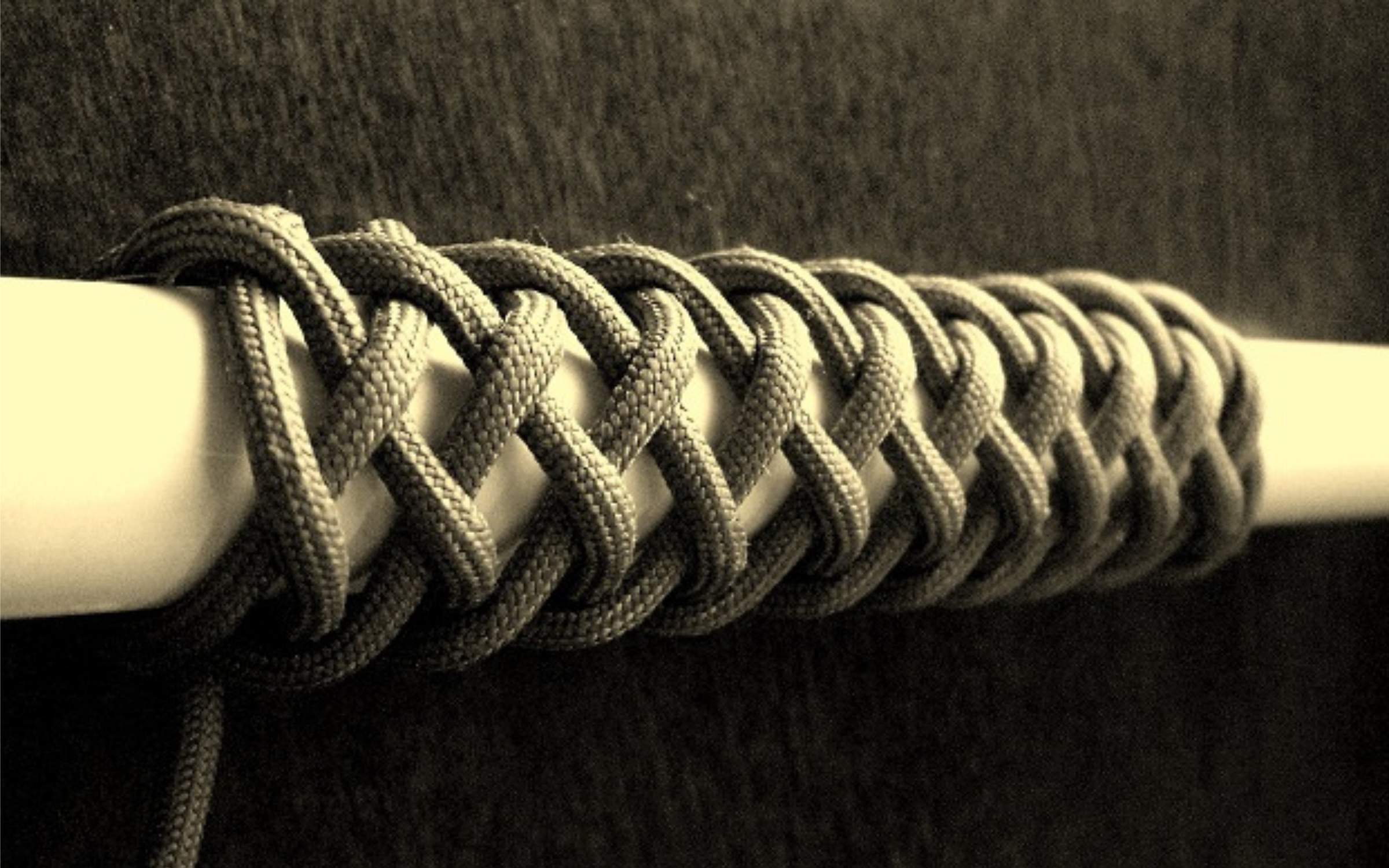 Photo from stormdrane.blogspot.com
- Lanyard knot: This functional knot creates a loop at the end of the handle, allowing you to attach additional accessories like clips or beads. This option is particularly useful for skeleton knives that lack lanyard holes, offering an alternative attachment point.
 Photo drom en.wikipedia.org
- Cobra weave: This intermediate-level technique creates a more intricate and visually appealing pattern compared to the cobra knot. It involves weaving the paracord in a specific way to form a continuous braid around the handle, offering both aesthetics and a secure grip.
- Double cobra weave: Building upon the cobra weave, this advanced technique incorporates two separate paracord colors, creating a visually striking and unique pattern. While requiring more practice and dexterity, it allows for even greater customization and visual appeal on your skeleton handle knives.
 Photo from instructables.com
For a comprehensive understanding of these paracord tying techniques and paracord tying techniques, numerous online resources and video tutorials are available. These resources provide detailed instructions and visual demonstrations, making it easy to learn and master even the more complex wrapping methods. Explore and experiment to find the technique that best suits your skill level, desired aesthetics, and the specific application of your skeleton knife paracord wrap.
Final Thoughts
Wrapping a knife handle with paracord is a fun and practical skill that offers numerous benefits. By understanding the advantages of using paracord and exploring different wrapping techniques, you can customize your knife and improve its functionality.