

A Guide to Selecting the Right Type for Your Needs.
Understanding Fixed Blade Knives
Fixed blade knives, unlike their folding counterparts, feature a blade permanently attached to a handle. This unwavering construction translates to superior strength, making them ideal for demanding tasks like prying, batoning wood, or chopping through tough materials. Their simplicity also enhances reliability, with fewer mechanisms to malfunction compared to folding knives.
The Advantages of a Fixed Blade Knife
Fixed blades offer several advantages over folding knives:
- Strength and Durability: The fixed design provides exceptional strength for tough jobs. For example, a fixed blade knife with a full tang construction can be used for batoning wood, a task that would likely damage a folding knife.
- Safety: There’s no risk of the blade accidentally folding on your fingers during use. This is a major safety benefit, especially for users who may be new to knife handling.
- Accessibility: A fixed blade knife is typically easier and faster to access from its sheath. This can be crucial in emergency situations where quick access to a cutting tool is necessary.
- Control: The fixed handle allows for better leverage and control during precise tasks like carving, whittling, or food preparation. The added rigidity of a fixed blade compared to a folding knife translates to cleaner cuts with less flex in the blade.
However, fixed blades can be less convenient to carry concealed due to their size and lack of a folding mechanism. Local laws regarding knife carry should also be considered.
Popular Types of Fixed Blade Knives
Fixed blade knives come in a wide variety, each specialized for a particular task:
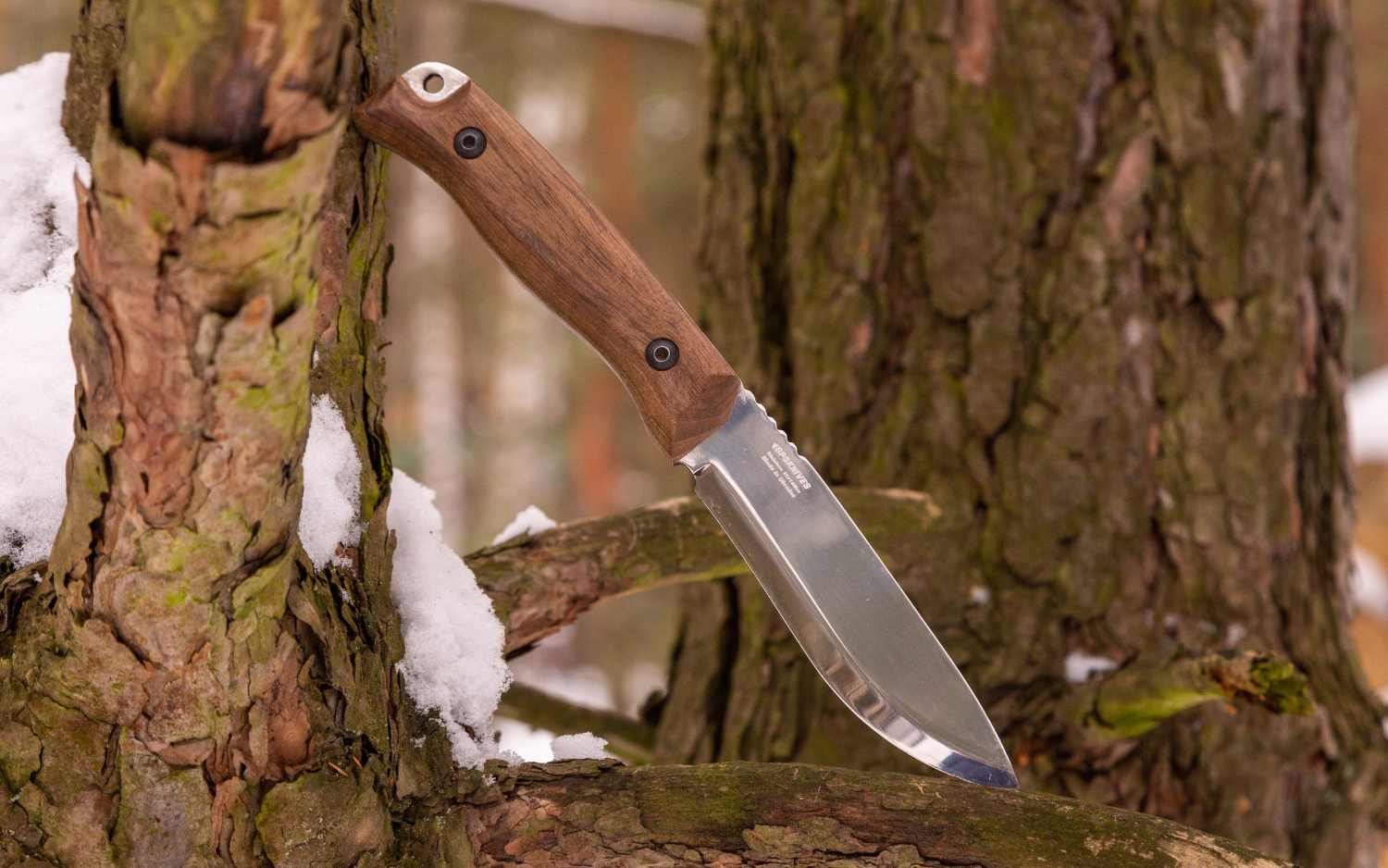
- Bushcraft Knives: Designed for wilderness survival and crafting tasks. They typically have a moderate blade length (3-5 inches) for versatility. A popular blade shape for bushcraft knives is the drop point, which offers a good balance between cutting and piercing ability. Example from BPS Knives: The HK1 CSH with its robust 1066 carbon steel blade and comfortable wooden handle excels in bushcraft applications.
- Hunting Knives: Prioritize sharpness and maneuverability for efficient field dressing and skinning. They often have a narrower blade (2-4 inches) with a pointed tip, such as a skinner or upswept blade design.
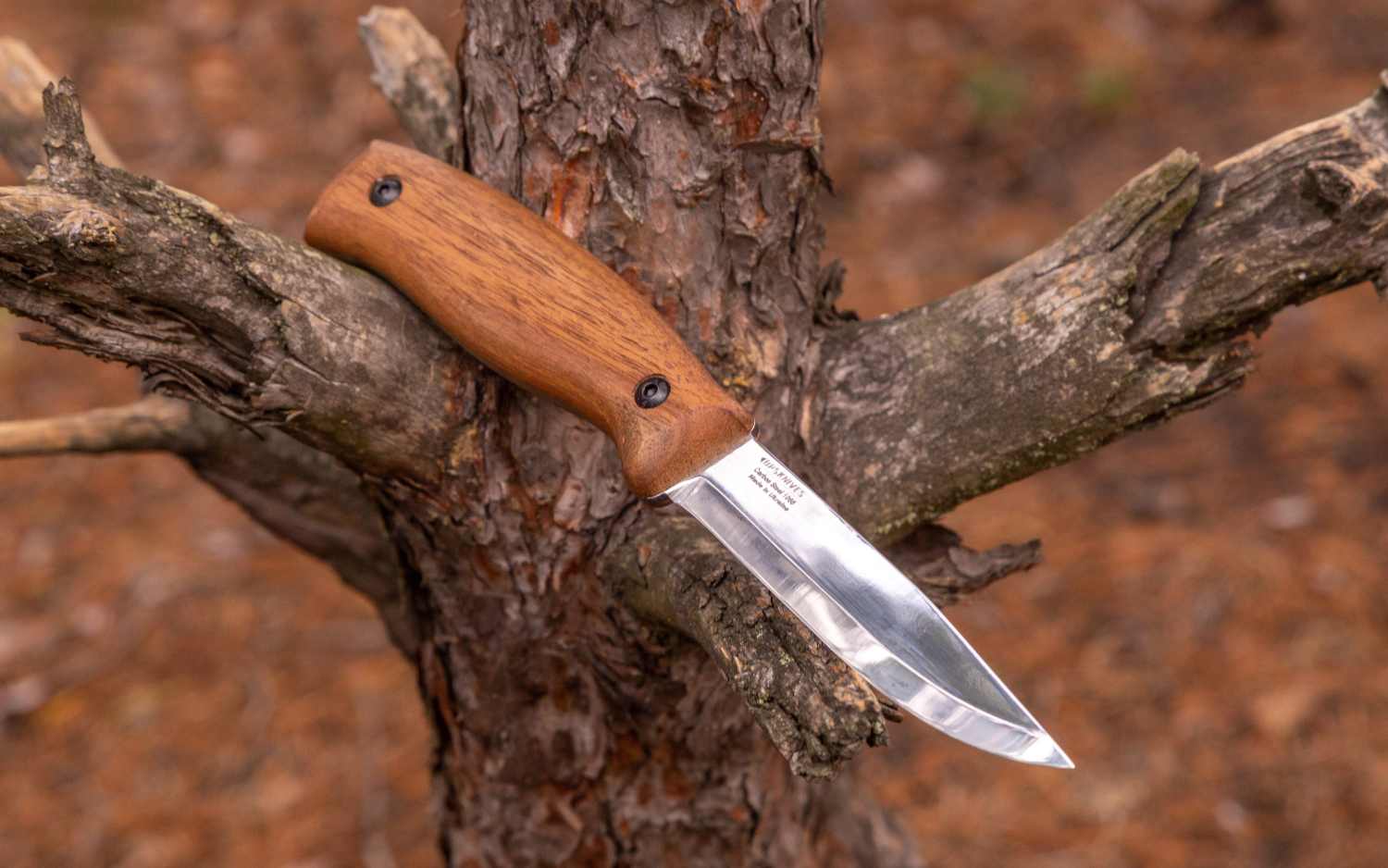
- Camping Knives: Offer a balance between chopping, cutting, and food preparation. They tend to have a slightly larger blade (4-6 inches) with a more prominent belly for slicing. Some camping knives may also feature a sawback for added functionality. Example from BPS Knives: The BS3 CSH boasts a high-quality 1066 carbon steel blade and comfortable handle, making it a valuable tool for campers.
- Survival Knives: Designed for emergency situations and provide a combination of cutting, prying, and self-defense capabilities. Their blades can vary in size but often prioritize strength over ultimate sharpness.
- Tactical Knives: Built for durability and self-defense scenarios. They may have features like aggressive points or serrations for piercing and slashing.
- Utility Knives: Focuses on everyday tasks like cutting rope, opening boxes, or stripping wires. They typically have a shorter blade (2-3 inches) with a utilitarian profile like a sheepfoot or spear point blade.
- Kitchen Knives: Fixed blade kitchen knives offer superior control and balance for food preparation tasks. Examples include chef’s knives, cleavers, and boning knives.
Choosing the Right Fixed Blade Knife
Consider these factors when selecting your fixed blade knife:
- Intended Use: What primary tasks will you be using the knife for? Different blade profiles and sizes are better suited for specific tasks.
- Blade Length and Style: Choose a size and profile that suits your needs and comfort level.
- Blade Steel: Different steels offer varying degrees of hardness, edge retention, and corrosion resistance. Popular choices include D2, 1066 and 5Cr14MoV for their balance of these qualities.
- Handle Material: Comfort and grip are crucial. Popular options include micarta, G10, and wood. Consider the weather conditions you will be using the knife in as well, as some materials like wood may be more susceptible to moisture.
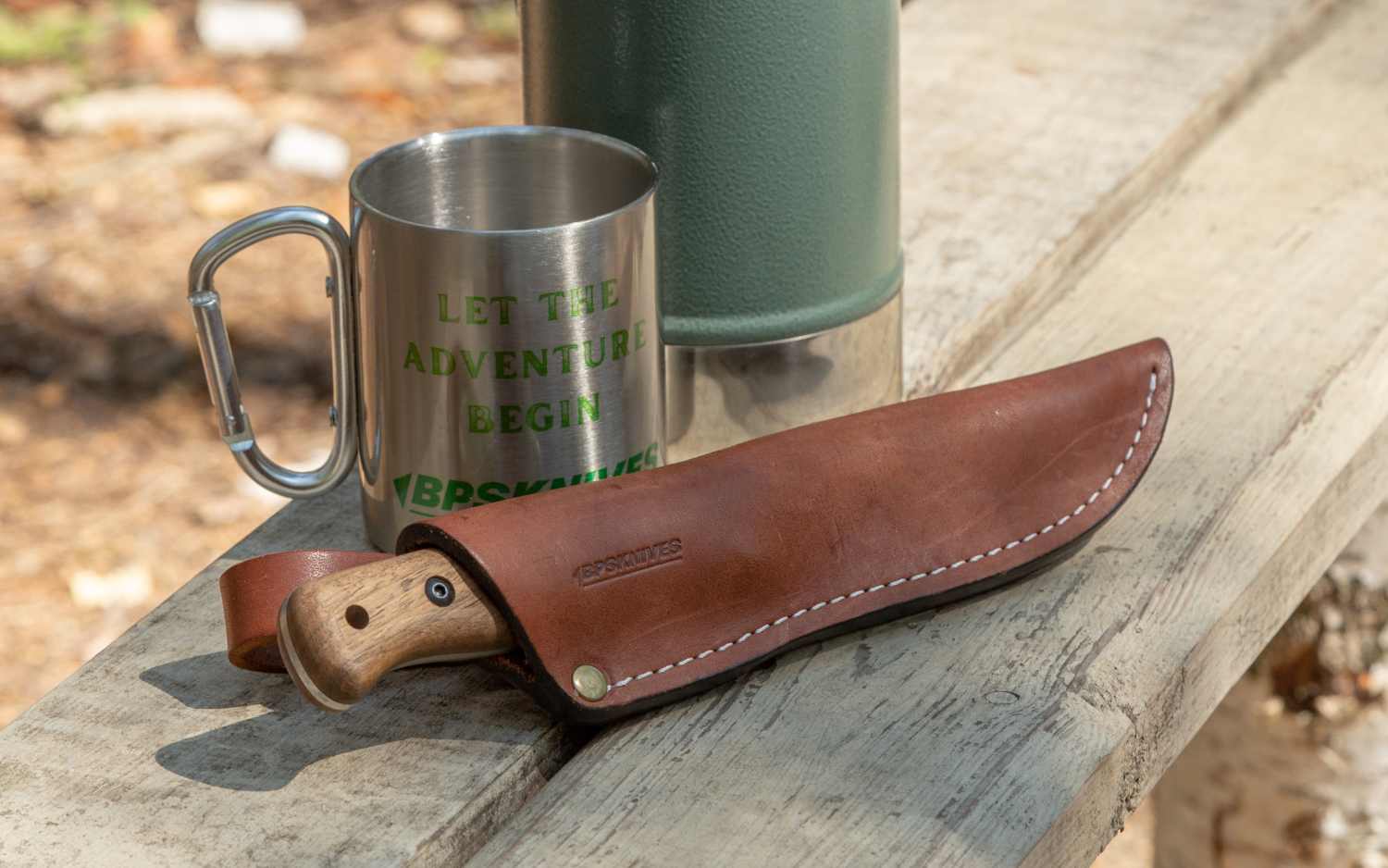
- Sheath: A good sheath protects the blade and allows for secure and convenient carry. Kydex sheaths offer excellent durability and weather resistance, while leather sheaths can be more traditional and comfortable to carry.
Caring for Your Fixed Blade Knife
- Regularly clean and dry your blade to prevent rust.
- Apply a light coat of oil to the Blade for storage.
- Sharpen the blade periodically using a whetstone or honing steel.
- Maintaining a sharp edge is essential for safety and performance.
- Maintain the sheath with leather conditioners if applicable. Leather sheaths can benefit from occasional treatments with a leather conditioner to preserve the material and maintain a good fit for the knife.
Final Thoughts
Fixed blade knives offer unmatched reliability, strength, and performance for various tasks. By understanding the different types and considering your specific needs, you can choose the perfect fixed blade knife from a reputable brand to become a dependable companion for your next adventure.