
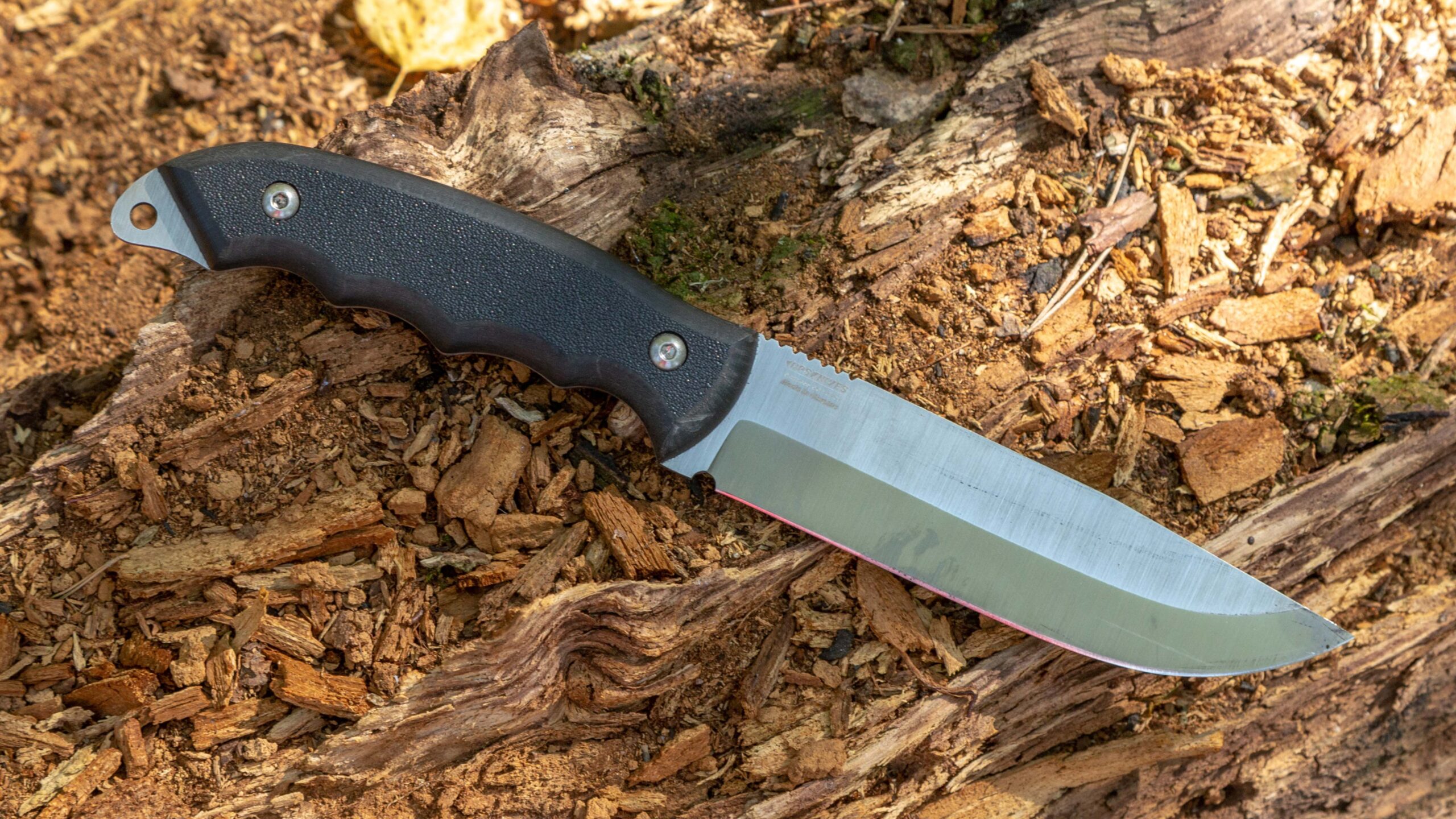
A small notch at the beginning of the blade — what is the use for it? This article has you covered the purpose of the knife choil.
Why does Knife have a Choil in the first place?
What is a Choil? Strictly speaking, choil is defined as an unsharpened part of the blade between the cutting edge and the tang. In practice it looks either like a small notch or a full half-circle, dividing the cutting edge and the guard — also called “Quillon”. There is no strict requirement for a knife to have a choil, but it serves a certain function.
How many knife choil types are out there? So far, there’s two major types of a blade choil — Sharpening Choil and Finger Choil. Both have their uses from a practical standpoint.
What is the Finger Choil?
This one is used to improve your grip over a knife, since it allows you to safely place your finger over the guard of a knife to hold it better. Typically, a finger choil does not have bevel on either side, and continues into the heel of the edge, where the sharp part of a knife begins.
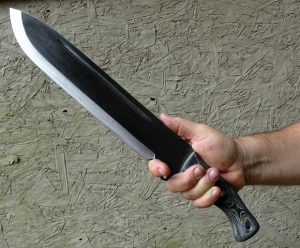
Photo from bladeforums.com
Finger Choil was a common part of non-foldable knives, and only recently moved to foldables. Some blademakers accompany finger choils with a finger hole next to the spine of the blade. While accompanied with finger hole, a finger choil allows for easier and quicker unfolding of the knife, leaving a spot to place a finger safely right away. In some cases, Finger Choil is accompanied with an additional guard, where you can place an index finger after opening a knife with the middle finger.
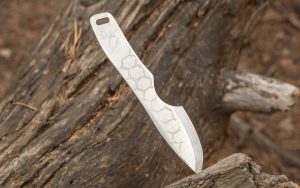
There’s also a Hybrid Finger Choil. In some modern-day knives, like this Techno Bee by BPS Knives, a much bigger Finger Choil can be made. For a full-tang design, a hybrid finger choil coming from the handle and to the blade may accommodate for a better overall grip, given the base design of the blade.
Choil is not a Ricasso. Initially, “Ricasso” came from Italy and described a part of dueling rapiers from the cup guard to quillons, or “heel”. In modern day knives, ricasso refers to a non-sharpened part of the blade between guards and the edge grind. Unlike the choil, ricasso does not have a shape and repeats the form of the blade.
Was there any use for Ricasso as well? Yes, actually, there is a thing called “inverted-grip technique”, when you hold a sword by the sharp side. This is part of an old German swordsmanship technique called Mordhau, when you are using the sword as the hammer against an armored opponent to stun them with a handle.
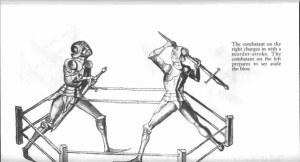
Photo from selfdefenseguides.info
During Medieval ages, ricasso on a two-handed sword were used as a part of grip tactique in tight spaces — it was long enough to accommodate for a full hand grip, which allowed for increased mobility during combat. It has nothing to do with a choil, and serves as an archaic part of the blade design to date. During legal calculations, it is assumed that Ricasso is the part of a knife, which adds up to the total length of the blade.
Finger Choil can be full, or partial
- Full Finger Choil starts at the end of a handle, going through a bolster until it meets the cutting edge. The part where Finger Choil meets the edge can be protected by dulling the inward curve;
- Partial Finger Choil can “eat up” the cutting part of the edge, while being part of the blade itself, and may not serve a clear purpose; Sometimes, it’s a design choice to make knife appeal more “tacticool” or accommodate for a oddly-shaped blade.
What is the purpose of the Finger Choil? Main use for the finger choil is to provide additional comfort during unfolding of a foldable knife and secure grip for a full-tang blade. This can help accommodate for fine-cutting tasks in tight places, where it’s troublesome to have a full grip over the knife. For people with big hands, finger choil may provide the added benefit of better point control while moving grip up the handle.
Is Finger Choil a silver bullet for the best grip? Actually, no, as it depends heavily on the blade design. Finger choil can provide safety points while climbing up the handle, or help to hold folding knives with spring design better.
Should you cut a finger choil on a knife? If you’re new to blademaking, try experimenting on cheaper steels before moving up a level with a finger choil. Because finger choil provides additional stress accumulation points, there are certain safety precautions to be done.
What is the Sharpening Choil?
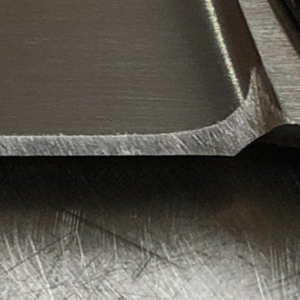
Off with the Finger Choils, let’s move on to the Sharpening Choil. From the practical standpoint, a sharpening choil should help you — well — sharpen the blade. You see, a point where the heel of the blade comes in contact with the guard is hard to sharpen, unless there’s a sharpening choil. Sharpening Choil makes it easier to maintain a flat bevel next to the heel, even on knives with extended ricasso, which goes way down below the edge.
With a sharpening choil you are less likely to damage the knife during re-sharpening. Some manufacturers place it, while others don’t. At BPS Knives we want you to have the best experience with a knife, especially when maintaining it over long periods of time. This is why we choose to place sharpening choil on most of our blade designs.
How does a sharpening choil help you to sharpen the knife? The small choil between guard and the edge, sometimes placed directly on the plunge lines, is called a sharpening choil. It helps by keeping only the edge on the sharpening surface, like stone or belt, while keeping away the plunge lines which indicate the transition between edge and the unsharpened part of the knife. This way, it’s harder to damage the unsharpened ricasso of the knife, while keeping the whole edge sharpened without the dull parts.
To choil or not to choil?
This is a question of preferences. Both Choil types have their use for certain people, and this is not a «silver bullet» over anything. Choil is a part of knife design, which can either improve your experience, or ruin it altogether if done poorly.
Finger Choil
Pros:
- Adds to the grip options of a knife;
- Easier to unfold the pocket knives.
Cons:
- Additional stress point for heavy blades.
Sharpening Choil
Pros:
- Easier to re-sharpen the blade without damaging guard, ricasso or plunge lines;
- Does not add to the weak points if done properly.
Cons:
- If made poorly, the sharpening choil only presents a weak point which can result in severe damage to the blade. You can see example of this below. A poorly done sharpening choil cracked during re-sharpening.
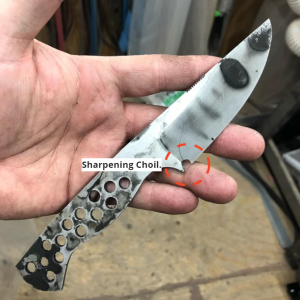
Photo from reddit.com
Stay Sharp.