
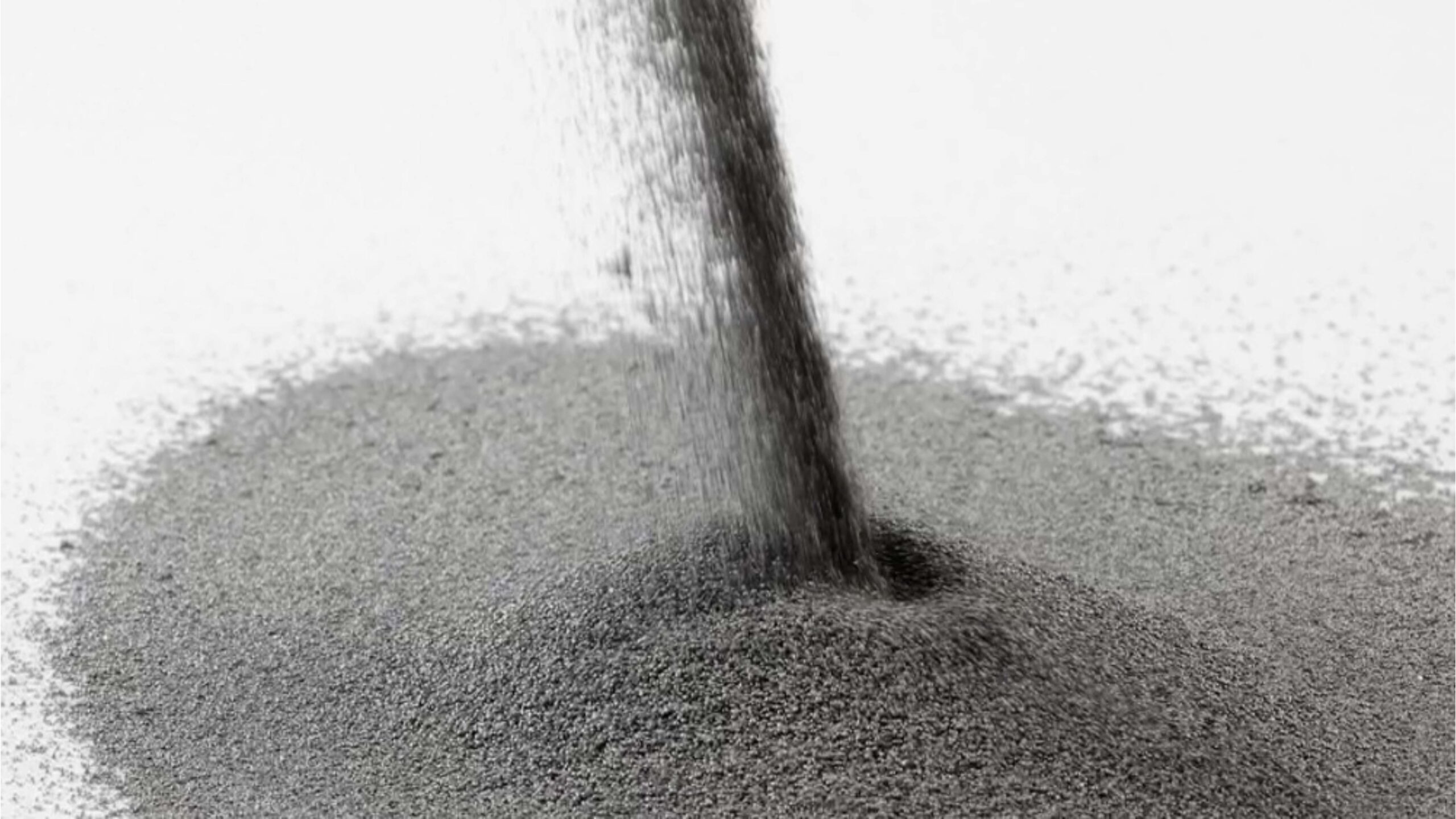
While looking for a knife, you may have heard terms such as “powdered steel” or “particle steel”, but what do they really mean and how much do they affect the blade performance?
What is powdered or particle steels and how they made
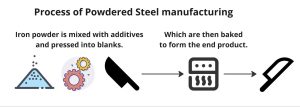
Powdered steel in a nutshell:
- Powdered steel is made by melting metal powder under equal pressure from each side of the alloy, during a process known as «hot isolated pressing» or HIP for short;
- HIP alloys have iron and additive atoms evenly distributed, leaving less space for impurities, pores, air bubbles and weak spots;
- Because material is distributed evenly in the alloy, the end-product has better wear resistance, grindability, toughness and is less prone to chipping, compared to regular steels;
- PM blades are void of weak spots in their structure, making blade much more shock resistant;
- Powdered or particle steels can be doped with chromium, carbon, tungsten and other additional metals to achieve higher corrosion resistance, reduce wear, increase strength and provide better edge retention;
- PM steel details can be shaped to any form without sacrificing strength of the material. PM parts are notable to be void of metal stress, produced during bending and machining.
Powdered, or particle, steels are basically alloys made from iron powder with additives during a process known as “high isolated pressing”. Also called “PM steels”, they are notable for inheriting most of the best from the metals used, while keeping the worst at bay. The final structure of the powdered steel includes martensite, carbides and various non-metallic inclusions.
PM steel alloys are as close to homogenous as we can have. Which means they have the most «even» distribution of iron and included atoms in the alloy’s atomic lattice. Some say that the goal of old Japanese folding techniques was to homogenize the structure of the metal, which may result in a stronger overall blade.
Recipe of powdered steel has been known since 17 BC. Famous Indian Iron Column was made in a similar way, remaining intact to this day. According to some archeological excavations, technology used to obtain powdered metal and process it was actively used 8 to 10 millennia ago. Further into the medieval times powdered steel technology has been used to make jewelry out of gold, platinum and other precious metals. However, given the way you obtain material, it is also possible to create makeshift powdered steel out of anything with high enough iron content.
Where powdered steels are used besides blademaking? Essentially, everywhere — from car manufacturing and aerospace industry, to construction. Most beneficial during high-speed manufacturing, but also used to make extreme-oriented tools capable of cutting steel and jet engine turbines.
How are PMS steels produced?
- Whole process might remind a bread baking:
- Metal powder is mixed with additives to adjust its properties;
- Powder is then shaped and pressed into raw blanks;
- Blanks are then sintered and heated below the melting point to bind atoms together;
- Raw details are then cooled down and machined.
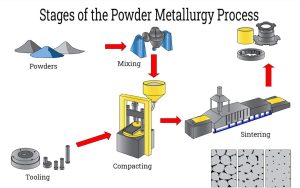
Photo from iqsdirectory.com
There’s two names for the Powdered-Metalurgical Steel process: PMS and CMP; the second one is used by Crucible Industries, a large American manufacturer of high-end knife steel, and was developed in 1970.
Is it possible to make Powdered Steel in the wilderness? Yes, but you have to skip the pressing phase, which would result in weaker material. You can buy steel powder and make PM steel yourself.
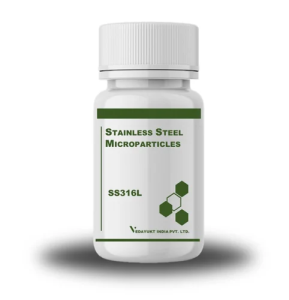 Photo from vedayuktindia.com
Advantages of using particle steel for a knife blade
For the knifemaking alone, PMS steels give the following advantages:
- Higher Rockwell C hardness without added brittleness, which makes blade more resistant to plastic deformation, such as bending, flexing and chopping.
- PM blades are less prone to chipping, which adds longevity to the knife;
- Much easier sharpening and general maintenance of the knife, since PMS steels are prone to be much malleable than regular ones;
- PM blades sustain acute edge angles better than non-PM steels.
- PM blades can be treated to a higher temperatures than general steels without the fear of breaking metal during hardening/cooling;
Examples of powdered steels
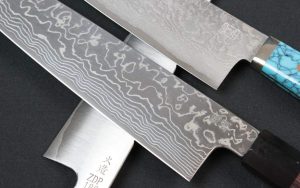
Photo from japanesechefsknife.com
Good Edge-Retention:
- S30V — overall «balanced» PM steel, holds edge better than S35VN, CPM-154, and BG42. Designed in conjunction with knifemakes and knife companies for good grindability, toughness, corrosion resistance, and edge retention;
- CPM-154 — a 154CM improved with CPM Crucible’s process;
- HAP-40 — high on Cobalt and Tungensten, 68 HRC;
Good Wear Resistance:
- S60V — Developed by Crucible, this martensitic-enriched 440C stainless steel with evenly distributed fine vanadium carbides has exceptionally good wear resistance qualities.
High-End:
- R2, SG2 (63~64 HRC) — expect good Edge Retention and durability.
- ZDP 189 — cobalt-enriched, tool-oriented steel by Hitachi Metals with 64-68 Rockwell hardness. Known to be used in high-end DIY knife making for premium cutlery.
- SRS 15 — Japanese high-speed PM, initially designed for precision tools like drill bits, it works well for kitchen knives with an acute, high polished edge.
Stay sharp.