
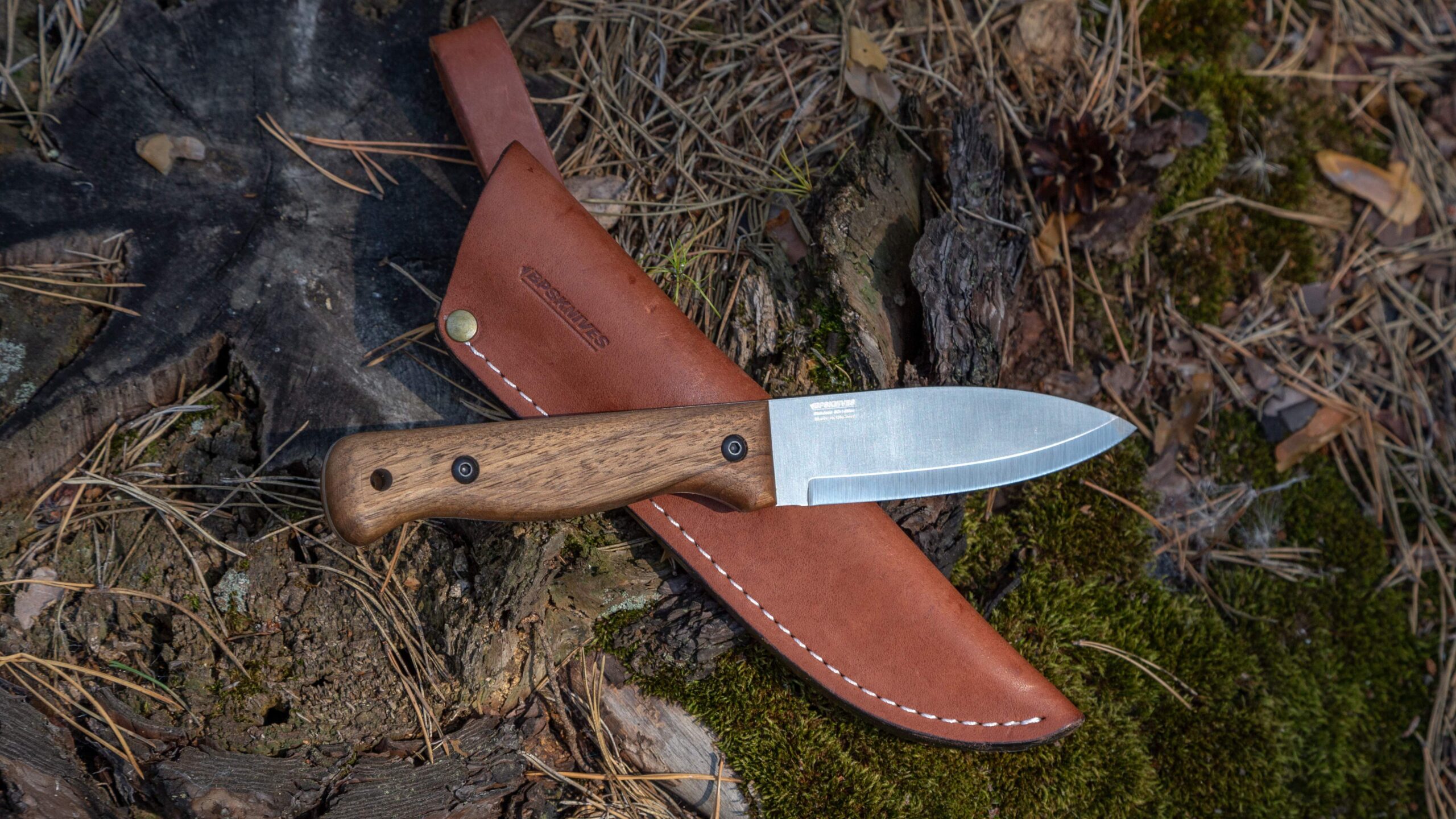
Breaking down a bushcraft knife — what makes it good and how to pick one for yourself?
How to pick a bushcraft knife and should you take more than 1?
There’s a proverb: «A true woodsman needs no more knife than the width of his palm». While sounding great, it also stands for «solo-knife» philosophy — one where you carry only one knife with you. Bushcraft knives are specially designed for survival in the wilderness, and if often used by scouts, military personnel, backpackers and outdoorsmen. Most bushcraft knives are characterized by a strong tip and a sturdy blade, which makes it durable and suitable for different tasks at once.
Bushcraft knives don’t come alone. In the 19th century George W. Sears introduced ultralight backpacking, making solo canoe travels with only your basic belongings a popular trend. Also known by the pen name «Nessmuk», he presented the selected trio of tools — 2 sided hatchet, two-bladed pocket knife and a slightly curved bushcraft knife, each for a specific task.
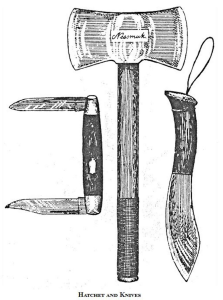
Photo from helvetiabushcraft.ch
Later on this trio of tools was revised by Horace Kephart — the man responsible for the foundation of the bushcraft idea and Yale librarian who helped to build the Appalachian Trail. He spent a good portion of time — 3 to 4 years — living near Hazel Creek, known today as Great Smoky Mountains National Park, with only basic tools and necessities. Later on, he revised the classic idea of Nessmuk’s Trio, adding a knife of his own design to the mix — now called «Kephart»’s.
Ethan Becker, modern-day owner of the original Kephart 19th century pattern knife, said that «There’s nothing on that knife that doesn’t need to be there». Many modern bushcraft knives follow the Kephart knife design. If you’re looking for a reference — here it is, a knife designed in bushcraft conditions by a bushcraft pioneer.
This is the original knife design by Horace Kephart and is one of the two remaining known knives:
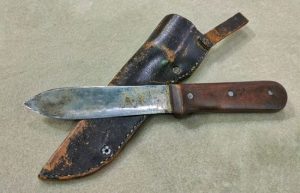
Photo from knifemagazine.com
Here’s what a bushcraft knife should be good for:
- Cutting Wood. Blade of the bushcraft knife must be strong enough to chop thick branches and cut through smaller twigs with ease;
- Food Preparation. A good bushcraft knife should be equally good at peeling fruits and vegetables, mincing raw meat and fileting a fish;
- Survival Tasks. Digging, drilling, batoning, building yourself an improvised shelter, carving makeshift spoons and plates;
- Making a fire. Bushcraft knives are suited towards making tinder and can serve as a firesteel, given the blade isn’t coated and the spine of the knife has rough edges.
What type of handle do you need for a bushcraft knife?
For colder regions — 20°C to -10°C — your best option is Micarta or Wood, since they both will feel «warmer» to the touch, than plastic handles which are going to be ice cold during cold. This material is also impervious to water, which is important for bushcraft application. Most Micarta types from natural fibers can «swell» from the moisture and provide a better grip, while paper-based Micarta remains slick no matter what. Having a Micarta handle would prove beneficial in cold climates, such as tundra or during winter bushcraft trips.
Should you consider wooden handles for a bushcraft knife? From a traditional standpoint, properly treated wooden handles can sustain wear & tear, while providing overall good grip qualities. Handles from Cocobolo, Desert Ironwood, Macassar Ebony, BloodWood, Ipe and Narra are known to be good for this purpose. Lignum Vitae and Ipe are hardest among them, with Lignum Vitae being used for shaft bearings in US submarines during WWII. Most adventurers pick wood just because it looks and feels nice, but stabilized woods are known to have no shrinkage problems, unlike Micarta. Others pick wood because it feels less «plastical» to the touch than other materials.
For warmer regions — from 30°C — you are good with G10, but mind the slippery nature of the plastic while being wet. Its warmth saving qualities are poor, and the handle might feel «icy» during cold weather. However, since G10 is made from fiberglass it’s almost as bombproof as Micarta, leaving a decent budget option to get into.
What’s better for a bushcraft knife — carbon or stainless steel?
Carbon Steel Bushcraft Knife:
- Harder than most steels and retains edge better over a period of moderate abuse;
- Known to be easily sharpened;
- Due to high carbon content it can be used as firesteel together with natural flint;
- Less rust and chipping resistance than such of stainless steel;
- Can form patina, which reduces light reflecting qualities of the knife, making it less usable as a signaling mirror;
- Can rust in moist conditions over extended periods of use without maintenance.
Stainless Steel Bushcraft Knife:
- Good rust and chipping resistance for the blade, meaning less chances to damage it in the long run;
- Makes a slightly less sharper edge, but still have great sharpening potential;
- Takes time to master proper sharpening with natural materials;
- Better resistance to shock and plastic deformation than carbon steels;
- Given it’s maintained, can hold edge on-par with carbon steel.
What blade type to consider for a bushcraft knife?
- Hardworking Knife — full-tang fixed blade with no moving parts. Skeletal Tang is a good option too, but won’t hold as good as full-tang.
- Backup Knife — foldable, easy to slide open, preferably with two different blades.
How big a bushcraft knife should be?
The Old Timer’s rule to pick a perfect length of the blade: lay your hand flat on the blade, your handwidth, or thereabouts, is your ideal blade length. Ray Mears added one about ax handle length too: from the fingertip of your main hand to its elbow.
- 3.5″ to 4″ (80mm to 100mm) seems to be the general consensus. At this length, the blade is suitable to field dress elk or whitetail.
- 4” to 4.5” (100mm to 110mm) blades are good for common-day survival tasks. With moderate weight addition, these knives are often paired with hatches or small axes. However, you can find it harder to carve wood with such a blade. Is some countries or states, 4 inch blade is the maximum legal size of the knife;
- 5” to 6” (127mm to 152mm) blades would be much more interesting from a tactical perspective, but still good for a bushcraft run. This length makes a good boning knife, but mind the local laws;
- 8” to 12” (232mm to 304mm) these blades are good to process firewood and can partially replace a hatchet. This blade size are optimal for slashing, but at this point you’re looking at specialized knife;
- Over 14″ — this is for macheters. They are good for cutting brushes, chopping out corn out of bean fields or any gardening activity. At this size, blade is mortally dangerous in close combat due to depth of wounds inflicted with a slashing move — be very aware of local laws and regulations;
Some bushcrafters advise to manually try knives from 2″ to 10″ to settle on your perfect size.
How thick should a bushcraft blade be?
- You’re looking for 1.4mm to 3.1mm or 1/16 to 1/8 of an inch.
What kind of sheath should you consider for a bushcraft knife?
Sheath is there to help you take out your knife as fast as possible, while making it easier to carry full-tang blades. Sheath should be at least as functional as the blade itself. For example, it can be M.O.L.L. E. compatible, made from waterproof nylon. Such sheaths are often seen in tactically-themed equipment, providing more pockets.
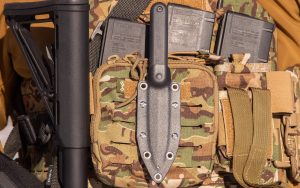
- If you already have M.O.L.L.E. gear on you — picking a Citizen SSH by BPS Knives as your bushcraft blade is a viable choice.
- Leather Sheath is a time-tested solution, which can be geared towards having an added slot for a Ferro Rod, as in Adventurer CSHF by BPS Knives.
Leather is the perfect option for «in the fields» sharpening. One reason you should consider leather over everything else is that you can use it to strop your knife to sharpen it «on the go». Since it’s considered as one of best sharpening surfaces, leather can help you maintain the bushcraft’s knife edge for longer, removing burrs along the surface.
Closing thoughts on selecting a bushcraft knife
«There is a blade for every purpose» is a wise summary of the bushcraft knife:
- Don’t go for «1-blade-for-everything» unless you know what you’re doing;
- Compliment your bushcraft knife with hatchet and secondary, smaller blade;
- Handle is everything, so choose one that sits well in your hand.
Stay Sharp.