
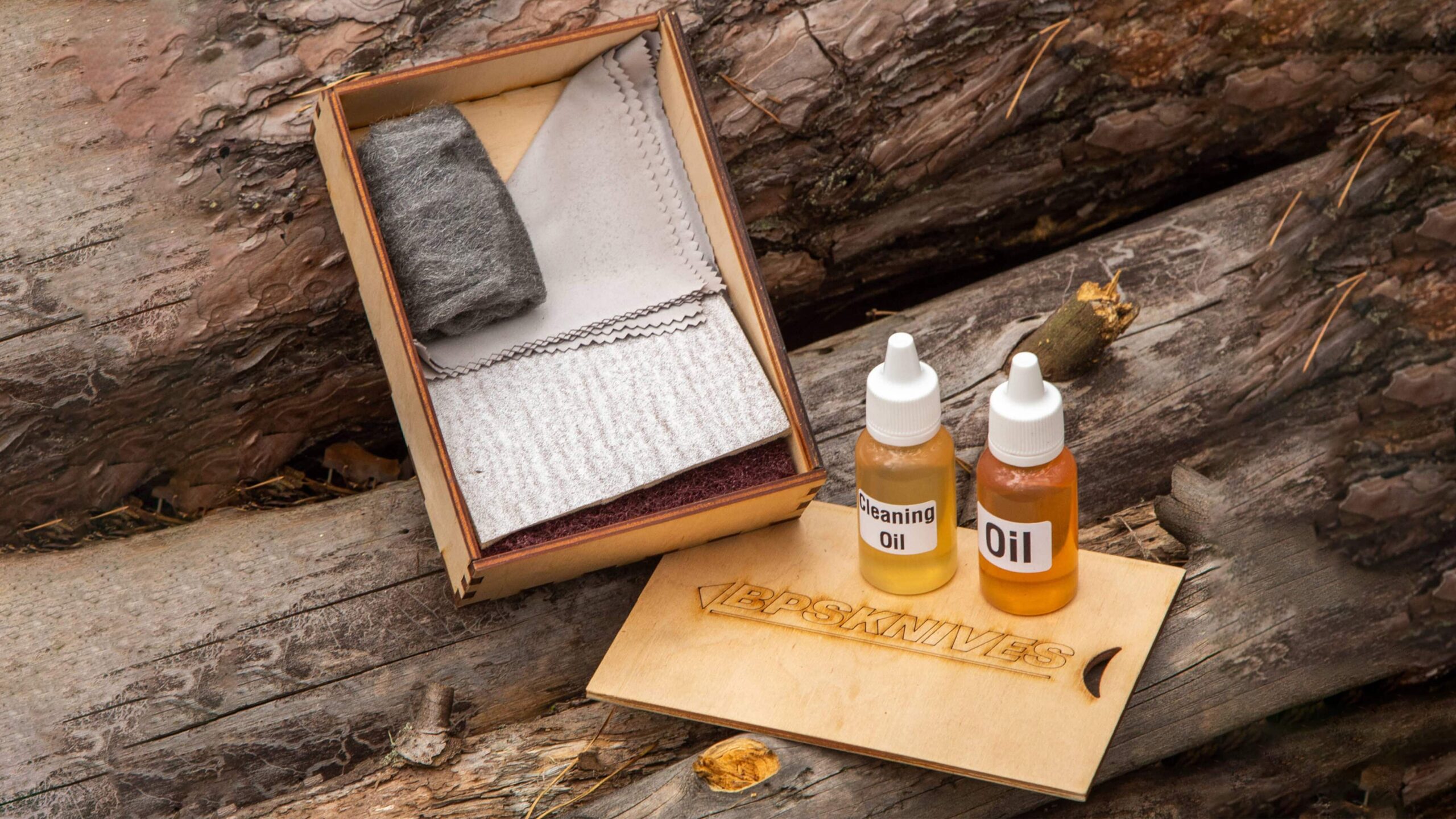
What it does and how it helps to make your BPS Knives handle last so long, that you can pass it down to the next generation?
What is Danish Oil and what is it used for?
During early ages people have to build ships out of wood. The key goal while building a wooden ship is to make it waterproof. While wood takes the handle of staying afloat, water on the other hand can pour into every crack possible. To prevent this, wood is dried to reduce the amount of excessive moisture and covered with finishing oil, which pours into the cracks, fills them up and reinforces the wooden block against moisture.
From what does Danish Oil protect the wood from? Because it is hard drying oil, it will polymerize into solid once exposed to oxygen. To put it simply — not only this treatment makes wood harder, it also makes it more resilient to weather conditions. Since cracks inside the wood are filled with solid polymer, there is no room for dirt, sand or water. This alone allows wooden handles to come on-par in terms of durability with other materials, such as Micarta.
When applied, Danish Oil leaves a hard satin finish, which is the main barrier between wood and water. This coating is not slippery, which contributes to the grip qualities of the wooden handle. From the looks standpoint it adds a slight dark finish to the wood.
Why is Danish Oil a popular wooden finish?
- Ease of application — you only need cloth or brush;
- Relatively quick curing — between 4 and 6 hours for a full wooden part;
- Food-safe — Danish Oil is made from non-toxic materials;
- Waterproof with style — this oil leaves lovely, stain-resistant, satin finish, while providing adequately protecting the wood;
- Odourless — low when drying and none when dry;
- Penetrative — oil is formulated to fill every pour in the wooden part, nourishing and protecting it;
- Filmless — Danish oil leaves no surface film;
- Dirt and Moisture Resistance — finished wood would resist stains and odor from wine, beer, coffee, tea, blood, sweat and grease;
- Danish Oil won’t «choke» the wood — while being naturally water resistant, this oil finish is also microporous to water vapour which helps wood to «breath» naturally.
- Ease of Maintenance — you can sand off most of the knocks, scuffs or stains and re-apply Danish Oil which will blend with the initial finish.
What is Danish oil made of? There is no single “original recipe”, one may call it a public intellectual property. Typically, it is made from blends of Linseed or Tung oils with mineral additives, synthetic resins and varnish to improve usability and make it easier to apply. Some brands like “Rustins” Danish Oil are considered to be as close to the “original” as possible. Usually, Danish Oil is diluted with solvent to make it easier to apply, turpentine or mineral spirits are best used for this purpose.
Where did Danish Oil come from? Some attribute the popularity of Danish Oil to increase in exports of Scandinavian furniture with nice finish looks, hence the name. After all, northern artisans are known to be reliably good at woodwork for thousands of years, with the first wooden constructions dating back to 3500 BC. Interestingly enough, this oil was called “Danish” by wood making brands and marketed as a great way to achieve the looks of Scandinavian furniture.
What type of wood Danish Oil is used with? This oil can be applied with both Hardwood and Softwood parts. One of the best wood types to use with Danish Oil is Oak and Pine, since it reinforces already sturdy wood and adds a nice finishing look.
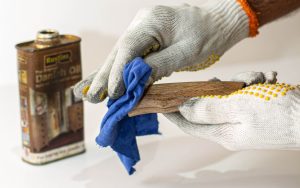
How often should you use Danish Oil on a wooden handle? Being relatively easy to re-apply, your wooden handle might need one to two thin coats every 6 months to appear naturally «fresh». Since it hardens after curing, Danish Oil can also fill some of the cracks and gaps, if they are present.
How to prepare wooden handles for Danish Oil Curing? Every knives by BPS Knives comes with a removable handle, which you can unscrew using a hexagonal screwdriver. This oil can be used on previously oiled or stained wood, overcoated even, with a spirit or water based woodstain. Be aware that sealing wood treatment makes it harder for oil to penetrate wood fully, reducing its protective qualities.
With previously waxed or polished surfaces you have to sand down to bare wood. In order to apply penetrative finish, you first have to remove any cover, such as wax or polish. While you technically can do whatever you want with BPS Knife after purchase, covering the handle with protective finish is better done before wax or polish treatment.
How to efficiently apply Danish Oil?
- Use lint-free cloth (T-shirt material) or good quality brush;
- Apply Danish Oil evenly and liberally across the surface;
- With cloth, use circular or eighth movement pattern to work into the wood;
- Apply Danish Oil until wood stops absorbing;
- Leave the handle for 20 minutes for oil to penetrate it fully;
- Wipe away excessive oil with lint-free cloth in the direction of wooden grain;
- To remove nibs or raised grain — if they are present — use fine grade sandpaper or wire wool with grits #500 to #1000.
Take care when using wire wool on oak, as the fibers left behind can react with wood and cause staining.
How many coats of Danish Oil does the wooden handle need? Do not over apply the Danish Oil, since from the practical standpoint two thin coats will always penetrate wood better than a single thick coating. Common wisdom here is to apply multiple thin layers of Danish Oil coating, since each one will penetrate the wooden part together with previous coating, filling the leftover gaps.
How long do you need to dry a wooden part after applying Danish Oil? 4 to 6 hours, or overnight, if we’re talking normal room temperature and humidity. Process can take slightly less time in a dry and warm room. However, avoid exposing the oil covered part to sunlight, cold or wet conditions. Try avoiding rainy weather for the curing stage, as the excessive condensation and humidity in air can interrupt the drying process.
Important part — test the Danish Oil on the small wooden spot before applying in full to make sure you match the wood coloring.

Photo from jmstyle.com.hk
Cover the blade in Danish Oil to avoid corrosion. You can use Danish Oil to protect your BPS Knives blade from corrosion if you choose the mode with high carbon steel. This is done to create a protective layer of coating between the surface of the knife and the humidity in the air. Your best option is to apply oil once a two to three months, thus making your blade much more rust-resistant, while keeping the benefits of high-carbon steel.